
Martin Luther
Albrecht of Brandenburg
The young Archbishop of Mainz whose debt for his offices was paid with the St. Peter’s indulgence, and to whom Luther sent the Ninety-Five Theses.
All Saints’ Day
All Saints' Day (November 1): its history from the Pantheon to Gregory IV, Rome's teaching on the intercession and merits of the saints, its place in the beginning of the Reformation, and a biblical response.
All Saints’ Day
All Saints' Day (November 1): its history from the Pantheon to Gregory IV, Rome's teaching on the intercession and merits of the saints, its place in the beginning of the Reformation, and a biblical response.
Anabaptists
The origins, convictions, conflicts, persecutions, and diverse legacy of the Anabaptists within the Radical Reformation.
Andreas Carlstadt
A short biography of Andreas Bodenstein von Carlstadt (1486–1541), Luther’s senior colleague at Wittenberg, leader of the Wittenberg reforms of 1521–22, and later professor at Basel.
Augsburg Confession (1530)
The Augsburg Confession of 1530: its occasion at the Diet of Augsburg, Melanchthon's authorship, Luther's part from the Coburg, the twenty-eight articles, the Roman Confutation, and the Invariata and Variata editions.
Authority
How the Reformation opposed human autonomy and ecclesiastical tradition by restoring Scripture as the church’s supreme authority.
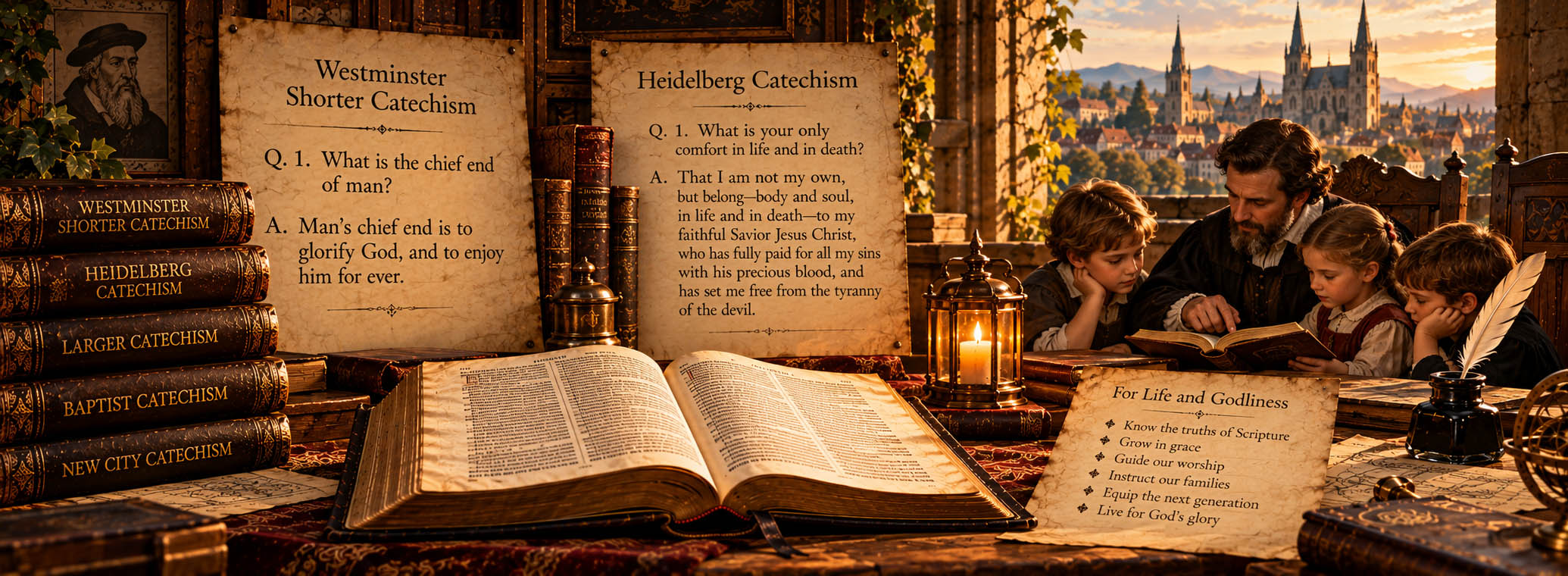
Catechisms
Several catechisms were drafted during the Reformation as tools for instruction and education.
Catholic Opponents of the Reformation
The major Roman Catholic opponents of the Protestant Reformation: popes, princes, bishops, inquisitors, and theologians, with a short biographical sketch of each.
Charles V
The emperor who outlawed Luther at Worms and spent his reign trying to restore one faith to his divided empire.
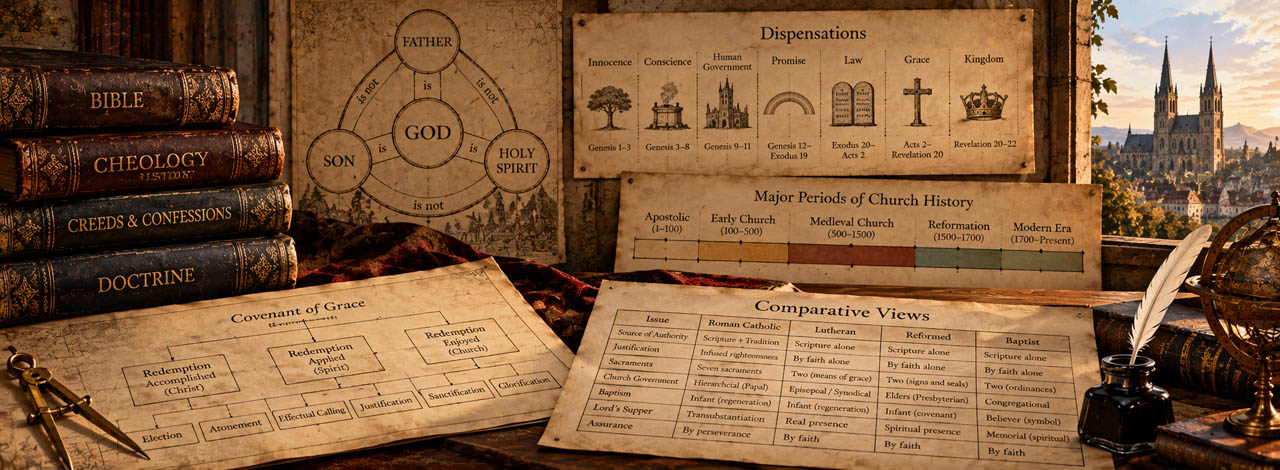
Charts and Tables
An index of charts, maps, timelines, family trees, and comparison tables for studying Reformation history and theology.
Church and State
A history of church and civil power from the martyrs and Constantine through the Reformation, liberty of conscience, and the First Amendment.
Church Discipline
How the Reformers recovered pastoral church discipline as a mark of the true church, a means of restoration, and a safeguard for the congregation.
Church Polity
An introduction to biblical church government and the episcopal, presbyterian, and congregational models that developed after the Reformation.
Confirmation
Confirmation in Roman Catholic teaching: its origin in the baptismal rite, its separation in the West, the Melchiades text, Trent and the Catechism, the answer of Luther and Calvin, and the witness of Scripture.
Confirmation
Confirmation in Roman Catholic teaching: its origin in the baptismal rite, its separation in the West, the Melchiades text, Trent and the Catechism, the answer of Luther and Calvin, and the witness of Scripture.
Corruptions in the Church
A survey of the moral, institutional, and doctrinal corruptions in the late medieval church that formed the backdrop to the Reformation.
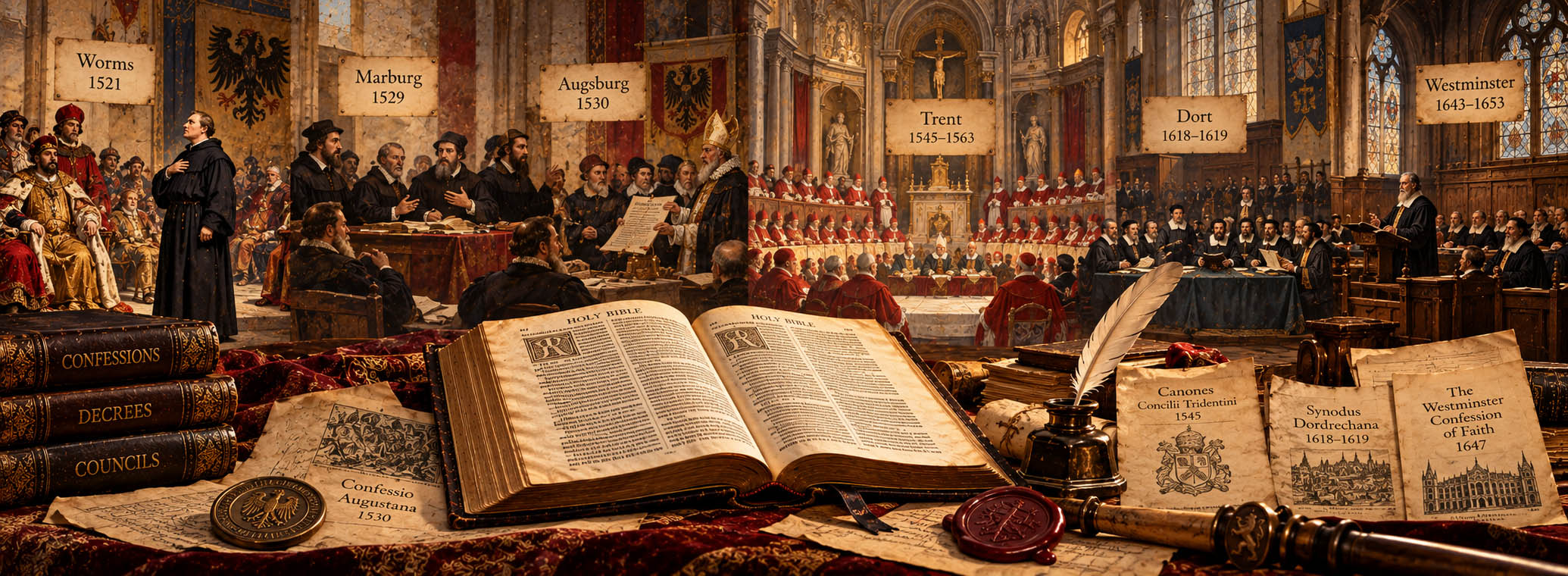
Councils and Synods
Explore the councils, diets, colloquies, and synods that shaped the Protestant Reformation, arranged in chronological order.
Desiderius Erasmus
The prince of the humanists, whose Greek New Testament of 1516 served the Reformation, but who sought the moral reform of Rome rather than the recovery of the gospel and wrote against Luther on the freedom of the will.
Disputations
A chronological guide to major public theological disputations that shaped the Protestant Reformation from 1518 to 1554.
Duke George of Saxony
The bearded duke of Dresden who hosted the Leipzig Debate and became Luther’s most determined princely enemy.
Elector John
John Frederick I of Saxony, the Lutheran elector who defended the Reformation after Frederick the Wise.
Flensburg Disputation (1529)
Flensburg Disputation (1529): A contest over the Lord’s Supper. A concise account of the debate and its place in the Protestant Reformation.
Frederick the Wise
Prince Frederick III (Frederick the Wise) of Saxony protected Martin Luther during the early days of the Reformation.
Geography of the Reformation
How borders, political alliances, trade, cities, language, and regional conditions shaped the spread and survival of the Protestant Reformation.
Girolamo Aleandro
The scholar-nuncio who burned Luther’s books in the Netherlands and the Rhineland and drafted the Edict of Worms.
Glossary of Catholic Terms
A glossary of Roman Catholic terms defined from Rome's own Catechism, Code of Canon Law, and papal documents, each with a brief answer from Scripture and the Reformation.
Glossary of Catholic Terms
A glossary of Roman Catholic terms defined from Rome's own Catechism, Code of Canon Law, and papal documents, each with a brief answer from Scripture and the Reformation.
God
How the Reformation restored God to the center of faith and life through Scripture, challenging the medieval synthesis and human autonomy.
Gospel Missions
How vernacular preaching, Geneva, early overseas efforts, and Reformation theology helped prepare the modern Protestant missionary movement.
Greek New Testament
How Erasmus’s printed Greek New Testament helped Reformers return to the sources and shaped the translations of Luther, Zwingli, and Tyndale.
Hans Tausen
A short biography of Hans Tausen (1494–1561), “the Luther of Denmark,” preacher at Viborg and Copenhagen and bishop of Ribe.
Heidelberg Disputation (1518)
Heidelberg Disputation (1518): Luther’s theology of the cross. A concise account of the debate and its place in the Protestant Reformation.
Hendrik Voes and Johann van Esschen
A short account of Hendrik Voes and Johann van Esschen, Augustinian friars of Antwerp burned at Brussels on July 1, 1523, the first martyrs of the Reformation.
Hieronymus Emser
Duke George’s secretary, who waged a pamphlet war with Luther and issued a rival German New Testament built on Luther’s own.
Hieronymus Schulz
Luther’s own bishop, who first counseled silence and then vowed to see the monk in the fire.
Holy Orders
Holy Orders in Roman Catholic teaching: the sacrificing priesthood, the seven orders, the delivery of the instruments, celibacy, Trent and the Catechism, and the answer of Luther, Calvin, and Scripture.
Holy Orders
Holy Orders in Roman Catholic teaching: the sacrificing priesthood, the seven orders, the delivery of the instruments, celibacy, Trent and the Catechism, and the answer of Luther, Calvin, and Scripture.
Hubmaier's Christian Catechism
Balthasar Hubmaier's Christian Catechism of 1526, the first Anabaptist catechism: written at Nikolsburg as instruction before baptism, its logic, its author's remarkable and troubling life, and an honest Reformed assessment.
Impact on Culture
How vernacular Bibles, psalm singing, worship, visual art, national languages, and sacred music reshaped Western culture after the Reformation.
Impact on Education
How the Reformation’s demand for biblical literacy produced schools, academies, parish education, and a broad Protestant commitment to learning.
Impact on Society
How the Reformation reshaped marriage, family, poor relief, the diaconate, work, and communal discipline in Western society.
Indulgences
The Roman doctrine of indulgences and the controversy that led Luther to post the Ninety-Five Theses in 1517.
Indulgences
The Roman doctrine of indulgences and the controversy that led Luther to post the Ninety-Five Theses in 1517.
Inquisitions
The Inquisitions of the Roman Catholic Church: their background, development, methods, and justification, their part in the persecution of the Reformation, and a list of the principal tribunals from 1184 to the present.
Inquisitions
The Inquisitions of the Roman Catholic Church: their background, development, methods, and justification, their part in the persecution of the Reformation, and a list of the principal tribunals from 1184 to the present.
Johann Eck
Luther’s ablest debater, who forced him at Leipzig to side with Hus and carried the bull of excommunication into Germany.
Johann Tetzel
The Dominican indulgence preacher whose sales just beyond Wittenberg’s border provoked Luther’s Ninety-Five Theses.
Johannes Brenz
A short biography of Johannes Brenz (1499–1570), Luther’s hearer at Heidelberg, reformer of Schwäbisch Hall and Württemberg, author of the Württemberg Confession, and catechist.
Johannes Bugenhagen
A short biography of Johannes Bugenhagen (1485–1558), “Doctor Pomeranus,” Luther’s pastor at Wittenberg and the organizer of the Lutheran churches of northern Germany and Denmark.
Johannes Cochlaeus
The tireless polemicist who betrayed Tyndale’s first English New Testament at Cologne and wrote the hostile life of Luther that shaped Catholic memory for centuries.
Julius Pflug
The humanist bishop of Naumburg who sought reunion on Rome’s terms and helped write the Augsburg Interim of 1548.
Justus Jonas
A short biography of Justus Jonas (1493–1555), Luther’s colleague at Wittenberg, translator, preacher, reformer of Halle, and witness of Luther’s death.
Katarina von Bora
A biography of Katarina von Bora, the former nun who married Martin Luther and shaped the Reformation household through faith, work, and hospitality.
Law and Gospel
How the Reformation distinction between law and gospel clarifies Scripture, exposes sin, announces Christ, and directs the Christian life.
Leipzig Disputation (1519)
Leipzig Disputation (1519): Luther and Eck debate papal authority, councils, and Scripture.
Luther's Large Catechism
Luther's Large Catechism of 1529: born from thirty sermons preached in 1528, written for pastors and fathers, its five parts, its famous preface on daily study, and its place in the Book of Concord.
Luther's Small Catechism
Luther's Small Catechism of 1529: the Saxon visitation that provoked it, the six chief parts, the question 'What does this mean?', the household as a school of the church, and its influence on every catechism that followed.
Lutheran versus Reformed
A comparison of Lutheran and Reformed traditions on Christology, worship, sacraments, covenant, law and gospel, and salvation.
Map of Major Reformers
A map locating major Protestant reformers and the European cities and regions most closely associated with their work.
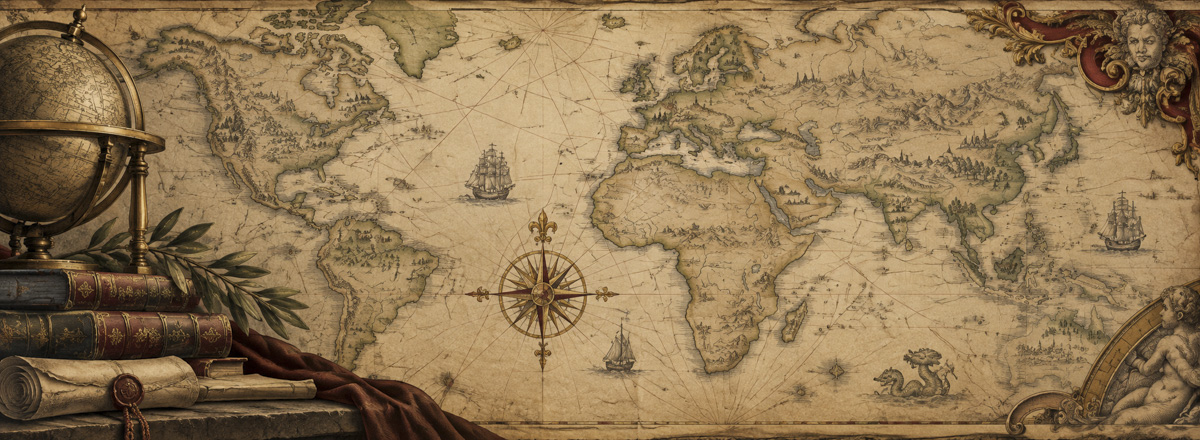
Maps
An index of Reformation maps tracing reformers’ journeys, major locations, regional movements, and important events across Europe.
Martin Luther
A biography of Martin Luther (1483–1546): the troubled monk of Erfurt, the gate of paradise in Romans 1:17, the Ninety-Five Theses, Leipzig, Worms, the Wartburg and the German Bible, Katie and the hymns, and the gospel of justification by faith alone.
Martin Luther Beginnings of Reformation
A historical map of Martin Luther’s early life and the places and events that marked the beginning of the Protestant Reformation.
Martin Luther’s Travels
An interactive chronological map of Martin Luther’s life and travels through Eisleben, Erfurt, Rome, Wittenberg, Worms, and the Wartburg.
Mikael Agricola
A short biography of Mikael Agricola (c. 1509–1557), Luther’s student, translator of the Finnish New Testament, first Protestant bishop of Turku, and father of Finnish literature.
Mortal and Venial Sins
Rome's distinction between mortal and venial sin, in the words of the Catechism and the Council of Trent, set beside the answer of Calvin, the Westminster Standards, and the Puritans: every sin deserves death, and the blood of Christ cleanses from all sin.
Mortal and Venial Sins
Rome's distinction between mortal and venial sin, in the words of the Catechism and the Council of Trent, set beside the answer of Calvin, the Westminster Standards, and the Puritans: every sin deserves death, and the blood of Christ cleanses from all sin.
Nikolaus von Amsdorf
A short biography of Nikolaus von Amsdorf (1483–1565), Luther’s friend at Leipzig and Worms, reformer of Magdeburg, first Protestant bishop of Naumburg, and strict defender of Luther’s teaching.
NINETY-FIVE THESES
The Ninety-Five Theses of Martin Luther, posted at Wittenberg in 1517 to debate indulgences.
Noël Béda
The Sorbonne’s formidable syndic, who hounded Lefèvre, Erasmus, and Berquin and demanded torture for the “false doctors.”
Olaus and Laurentius Petri
A short account of the brothers Olaus Petri (d. 1552) and Laurentius Petri (1499–1573), Wittenberg-trained reformers of Sweden, translators of the Swedish Bible, and first Lutheran archbishop of Uppsala.
Patrick Hamilton
A brief biographical sketch of Patrick Hamilton (c. 1504–1528), author of Patrick’s Places and the first martyr of the Scottish Reformation.
Philip Melanchthon
A short biography of Philip Melanchthon (1497–1560), Luther’s colleague at Wittenberg, author of the Loci Communes and the Augsburg Confession, and the Preceptor of Germany.
Philip of Hesse
As a seventeen-year-old, Philip heard Luther defend his teachings at the Diet of Worms.
Pope Leo X
Pope Leo X, 1513 to 1521: the Medici pope under whom the indulgence controversy broke out, who condemned Luther in Exsurge Domine and excommunicated him.
Pope Leo X
Pope Leo X, 1513 to 1521: the Medici pope under whom the indulgence controversy broke out, who condemned Luther in Exsurge Domine and excommunicated him.
Preaching
Why the Reformation restored biblical preaching to the center of worship and treated the proclaimed Word as essential to the life of the church.
Purgatory
The Roman doctrine of purgatory, its place in the medieval system of indulgences, and the Reformers’ scriptural response.
Purgatory
The Roman doctrine of purgatory, its place in the medieval system of indulgences, and the Reformers’ scriptural response.
Purity
How the Reformation located holiness after justification, joining sanctification to grace, union with Christ, faith, love, and daily repentance.
Purpose
How the Reformation recovered humanity’s chief end: to glorify God and enjoy Him through worship, vocation, obedience, and life in Christ.
Redemption
How the Reformation recovered the biblical gospel of redemption by grace through faith in Christ as God’s power to save sinners.
Reformation Overview
An overview of the Protestant Reformation as the vastest convergence of divine grace in nearly two thousand years of church history.
Reformation Wall
An interactive presentation and visitor reference for Geneva's Reformation Wall, commemorating leading figures and events of the Protestant Reformation.
Reformers
Profiles of the Reformers, a Reformation larger than any one man, group, or movement.
Relics
The Roman Catholic veneration of relics: what relics are, how the medieval councils and Trent regulated them, Frederick the Wise's collection at Wittenberg, and the Reformers' answer from Scripture.
Relics
The Roman Catholic veneration of relics: what relics are, how the medieval councils and Trent regulated them, Frederick the Wise's collection at Wittenberg, and the Reformers' answer from Scripture.
Robert Barnes
A short biography of Robert Barnes (d. 1540), Augustinian prior of Cambridge, exile with Luther, envoy of Henry VIII, and martyr at Smithfield.
Roman Catholic Decrees
A timeline of the official decrees of Roman Catholic councils and popes that bear on the Reformation: Scripture, salvation, the sacraments, worship, Mary, papal authority, and persecution.
Roman Catholic Decrees
A timeline of the official decrees of Roman Catholic councils and popes that bear on the Reformation: Scripture, salvation, the sacraments, worship, Mary, papal authority, and persecution.
Roman Catholic Justification
The doctrine of justification as the central issue between Rome and the Reformers, on which every other difference rests.
Roman Catholic Justification
The doctrine of justification as the central issue between Rome and the Reformers, on which every other difference rests.
Roman Catholicism
An introduction to Roman Catholic belief, doctrine, and polity, and how the Reformers answered it from Scripture.
Roman Catholicism
An introduction to Roman Catholic belief, doctrine, and polity, and how the Reformers answered it from Scripture.
Sola Fide
An explanation of sola fide: God justifies sinners through faith alone in Christ, apart from works or personal merit.
Sylvester Prierias
The papal theologian whose reply to Luther made the pope, not Scripture, the infallible rule of faith.
The Bondage of the Will
An introduction to Martin Luther’s Bondage of the Will, his reply to Erasmus on sin, grace, sovereignty, responsibility, and saving faith.
The Colloquy of Marburg
The Colloquy of Marburg, 1529: Philip of Hesse's attempt to unite Luther and Zwingli, the fifteen Marburg Articles, the one point they could not sign together, and why the division over the Lord's Supper still matters.
The Colloquy of Regensburg
The Colloquy of Regensburg (1541): Charles V’s attempt to reunite Protestants and Catholics, the agreed article on justification, the break over the church and the Mass, and Calvin’s warning against a “half-Christ.”
The Council of Constance
The Council of Constance, 1414 to 1418: the Great Schism ended, the supremacy of councils declared, Wycliffe condemned, and Jan Hus burned in defiance of an imperial safe-conduct.
The Council of Constance
The Council of Constance, 1414 to 1418: the Great Schism ended, the supremacy of councils declared, Wycliffe condemned, and Jan Hus burned in defiance of an imperial safe-conduct.
The Council of Trent
The Council of Trent, 1545 to 1563: Rome's answer to the Reformation. Its three periods, the decree on Scripture and tradition, the decree on justification and its anathemas, the abuses it genuinely reformed, and the Protestant replies of Calvin and Chemnitz.
The Council of Trent
The Council of Trent, 1545 to 1563: Rome's answer to the Reformation. Its three periods, the decree on Scripture and tradition, the decree on justification and its anathemas, the abuses it genuinely reformed, and the Protestant replies of Calvin and Chemnitz.
The Counter-Reformation
The Roman Catholic Counter-Reformation: its roots before Luther, the Council of Trent and its anathemas, the Jesuits, the Roman Inquisition and the Index, and what it reformed and what it refused.
The Counter-Reformation
The Roman Catholic Counter-Reformation: its roots before Luther, the Council of Trent and its anathemas, the Jesuits, the Roman Inquisition and the Index, and what it reformed and what it refused.
The Diet of Augsburg
The Diet of Augsburg of 1530: why Charles V called it, the three confessions submitted to him, the Confutation, the Recess of 19 November and its ultimatum, and the Schmalkaldic League that answered it.
The Diet of Worms
The Diet of Worms, 1521: Luther before Charles V, drawn chiefly from Roland Bainton's Here I Stand — the two hearings, the request for a day's delay, the answer of 18 April, the committee that nearly broke him, and the Edict passed by a rump.
The Diets of Speyer
The Diets of Speyer (1526 and 1529): the Word of the Lord endures forever, the recess that let each state answer to God, the Protestation that named the Protestants, and Calvin’s plea at Speyer in 1544.
The Fifth Lateran Council
The Fifth Lateran Council, 1512 to 1517, under Julius II and Leo X: papal supremacy over councils, the immortality of the soul, the censorship of printed books, and a call to reform that closed seven months before the Ninety-Five Theses.
The Fifth Lateran Council
The Fifth Lateran Council, 1512 to 1517, under Julius II and Leo X: papal supremacy over councils, the immortality of the soul, the censorship of printed books, and a call to reform that closed seven months before the Ninety-Five Theses.
The Formula of Concord
The Formula of Concord of 1577: the controversies that divided Lutheranism after Luther's death, the road from the Swabian Concord to the Bergen Book, the twelve articles, and the two parts — Epitome and Solid Declaration.
The Freedom of the Human Will
A survey of the Reformation debate between Erasmus and Luther over the fallen will, saving grace, divine sovereignty, and human responsibility.
The Heidelberg Catechism
The Heidelberg Catechism of 1563: why Frederick III commissioned it, who actually wrote it, its threefold shape of guilt, grace, and gratitude, the law placed under thanksgiving, Question 80, and its place among the Three Forms of Unity.
The Hussites
A history of Jan Hus and the Hussite movement, its teaching, factions, the Unity of the Brethren, and its connection to the Protestant Reformation.
The Jesuits
The Society of Jesus: Ignatius of Loyola, the Spiritual Exercises, the Jesuits at Trent, their schools and missions, the English mission, and the Reformation response.
The Jesuits
The Society of Jesus: Ignatius of Loyola, the Spiritual Exercises, the Jesuits at Trent, their schools and missions, the English mission, and the Reformation response.
The Lollards
A history of Wycliffe’s Lollards, their preaching and English Scriptures, persecution, leading witnesses, and survival into the English Reformation.
The Mass
Why the Reformers rejected the Roman Mass as a repeated sacrifice, and what Scripture teaches of the Lord’s Supper.
The Mass
Why the Reformers rejected the Roman Mass as a repeated sacrifice, and what Scripture teaches of the Lord’s Supper.
The Papacy
The papacy examined: Rome's claims for Peter and his successors, Matthew 16:18, the rise of the Roman see, papal infallibility, its corruptions, and the answer of Scripture and the Reformers.
The Papacy
The papacy examined: Rome's claims for Peter and his successors, Matthew 16:18, the rise of the Roman see, papal infallibility, its corruptions, and the answer of Scripture and the Reformers.
The Popes During the Reformation
The condition of the papacy through the Reformation and the succession of popes who responded to it.
The Popes During the Reformation
The condition of the papacy through the Reformation and the succession of popes who responded to it.
The Priesthood of All Believers
How the Reformation recovered the priesthood of all believers while preserving the pastoral ministry and Christ’s unique high priesthood.
The Sacrament of Penance
The sacrament of penance: the second plank after shipwreck, its rise from public discipline to private confession, contrition and attrition, confession and absolution, satisfaction and indulgences, and the answer of the Reformers and Scripture.
The Sacrament of Penance
The sacrament of penance: the second plank after shipwreck, its rise from public discipline to private confession, contrition and attrition, confession and absolution, satisfaction and indulgences, and the answer of the Reformers and Scripture.
The Smalcald Articles (1537)
An introduction to the Smalcald Articles of 1537 and the complete English text of Martin Luther's three-part confession, with preface and subscriptions.
The Story
A survey of the Protestant Reformation within the larger history of Christ's church, with a guided path through its people, events, theology, and legacy.
The Waldensians
A history of Peter Waldo and the Waldensians, their preaching, persecution, doctrine, Alpine refuge, and union with the Reformation in 1532.
The Westminster Shorter Catechism
The Westminster Shorter Catechism of 1647: the Assembly that produced it, its two halves, and a close reading of the first question — eleven words that have shaped Reformed piety for four centuries.
The Zurich Disputations
The Zurich Disputations of 1523: Zwingli's Sixty-Seven Articles, the first Reformed confession; a city council that made Scripture the judge; and the question from Conrad Grebel that split the Reformation in two.
Theological Recoveries
An introduction to the central theological recoveries and controversies of the Reformation, from grace and atonement to vocation and union with Christ.
Theology of the Cross
Luther’s theology of the cross from the Heidelberg Disputation, contrasting God’s revelation in Christ crucified with the theology of glory.
Thomas Cajetan
The learned cardinal-legate who examined Luther at Augsburg in 1518 and demanded that he recant.
Thomas Wolsey
Henry VIII’s all-powerful cardinal, who burned Luther’s books in London and on his deathbed urged the king to destroy “this new pernicious sect.”
Traditions
The question of final authority between Rome and the Reformers: Scripture alone or Scripture with tradition and the church.
Traditions
The question of final authority between Rome and the Reformers: Scripture alone or Scripture with tradition and the church.
Translation of the Bible
Why Scripture must be translated, the choices translators face, major translation philosophies, textual questions, and guidance for choosing a Bible.
Transubstantiation
The Roman doctrine of transubstantiation and the Englishmen burned for denying it during the Reformation.
Transubstantiation
The Roman doctrine of transubstantiation and the Englishmen burned for denying it during the Reformation.
Truth
How the Reformation related truth, revelation, reason, and authority by restoring Scripture above human tradition and autonomous thought.
Tyndale’s New Testament
The story, Greek sources, theology, language, smuggling, and lasting influence of William Tyndale’s 1526 English New Testament.
Union with Christ
How union with Christ joins justification and sanctification as the double grace received by faith through the Holy Spirit.
Vocation
How Luther, Calvin, and Tyndale recovered ordinary callings as sacred service to God and neighbor flowing from justification by faith.
Where Christ Is Found
How Luther, Calvin, Tyndale, and the Reformation confessions identified the true church by Word, sacrament, and discipline.
Who?
Who brought about the Reformation: the men and women God raised up, and the God who raised them.
World Impact
An introduction to the Reformation’s far-reaching effects on education, government, commerce, culture, society, and the development of the modern West.
Worldview Matters
How the Reformation transformed basic beliefs about God, humanity, truth, purpose, and redemption by returning to Scripture.
