
Councils and Synods
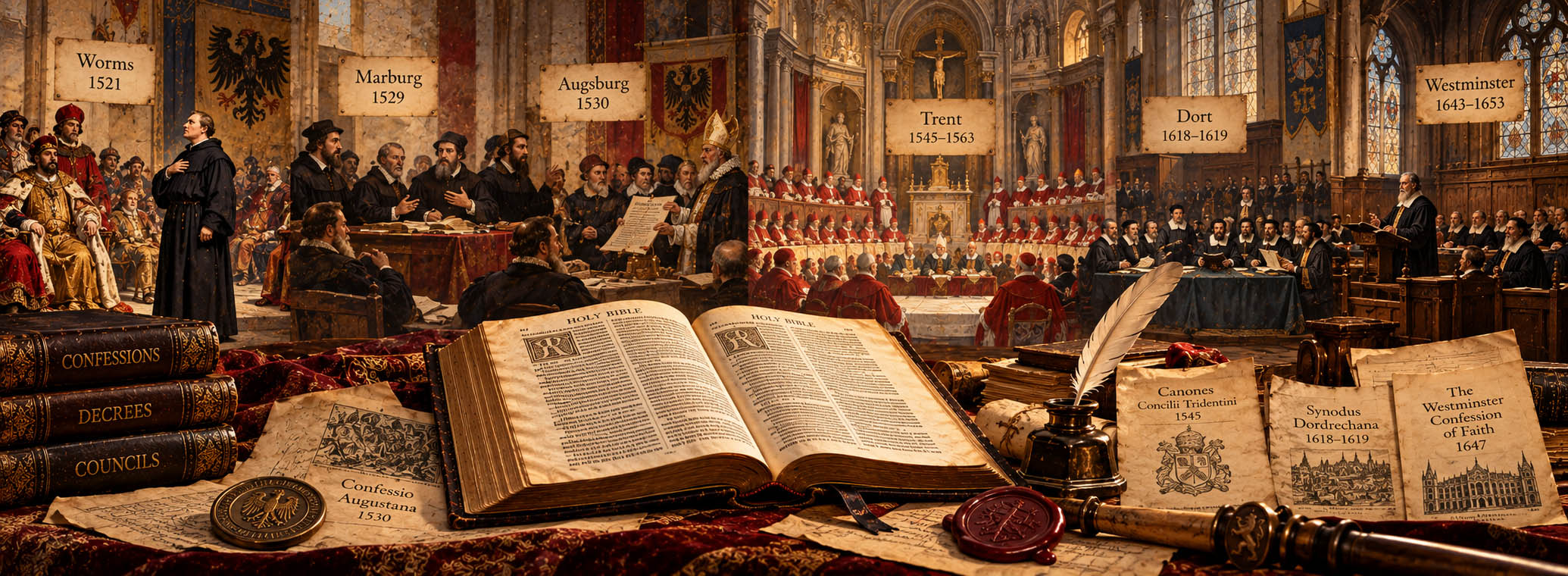
Explore the councils, diets, colloquies, and synods that shaped the Protestant Reformation, arranged in chronological order.
Diet of Worms (1521)
Follow Martin Luther’s two hearings before Emperor Charles V, his famous answer, and the
negotiations that followed. The page also explains the Edict of Worms and the political circumstances
surrounding it.
Council of Zurich (1523)
Learn how Zurich’s disputations established Scripture as the judge of reform and advanced
Zwingli’s Sixty-Seven Articles. The page also traces the question that divided the Magisterial
Reformers from the emerging Anabaptists.
Diets of Speyer (1526, 1529)
See how the first diet left each state to answer to God and the Emperor, and how the second provoked
the Protestation that gave Protestants their name. The page also notes Calvin’s appeal to the
Diet of Speyer in 1544.
Colloquy of Marburg (1529)
Examine Philip of Hesse’s effort to unite Luther, Zwingli, and their allies around the Marburg
Articles. The page focuses on their decisive disagreement over the Lord’s Supper and its lasting
consequences.
Diet of Augsburg (1530)
Discover why Charles V summoned the diet, the confessions presented there, and the Roman Catholic
response. The page follows the breakdown of negotiations through the imperial ultimatum and the
formation of the Schmalkaldic League.
Council of Geneva (1536)
Trace Geneva’s path from the Dispute de Rive and suspension of the mass to its public commitment
to live by the Gospel. The page clarifies what the council’s vote accomplished before Calvin
arrived in the city.
Colloquy of Regensburg (1541)
Follow Charles V’s attempt to reunite Protestants and Catholics, where both sides agreed on an
article on justification. The page explains why the colloquy broke down over the church and the Mass,
and why Calvin refused to settle for a “half-Christ.”
Synod of Dortrecht (1578)
Explore the first national synod of the Dutch Reformed churches held on Dutch soil. The page surveys
its church order, its defense of Christ’s authority over the church, and its relationship to the
civil magistrate.
Synod of Dort (1618-1619)
See how an international Reformed assembly answered the Arminian Remonstrance in the Canons of Dort.
The page explains the five heads of doctrine, their later association with TULIP, and the
synod’s enduring significance.
Westminster Assembly (1643-1653)
Enter the debates of the assembly called by the Long Parliament during the English Civil War. The page
introduces its contending parties and the confessional, catechetical, and ecclesiastical standards it
produced.
