
John Calvin
After Darkness, Light
The story of Geneva’s motto, Post Tenebras Lux, and how the recovered gospel brought the light of Christ out of medieval darkness.
Arminianism
The origins and theology of Arminianism from Jacob Arminius and the Remonstrance of 1610 to the Synod of Dordt and its aftermath.
Church Discipline
How the Reformers recovered pastoral church discipline as a mark of the true church, a means of restoration, and a safeguard for the congregation.
Church Polity
An introduction to biblical church government and the episcopal, presbyterian, and congregational models that developed after the Reformation.
Confirmation
Confirmation in Roman Catholic teaching: its origin in the baptismal rite, its separation in the West, the Melchiades text, Trent and the Catechism, the answer of Luther and Calvin, and the witness of Scripture.
Confirmation
Confirmation in Roman Catholic teaching: its origin in the baptismal rite, its separation in the West, the Melchiades text, Trent and the Catechism, the answer of Luther and Calvin, and the witness of Scripture.
Councils and Synods
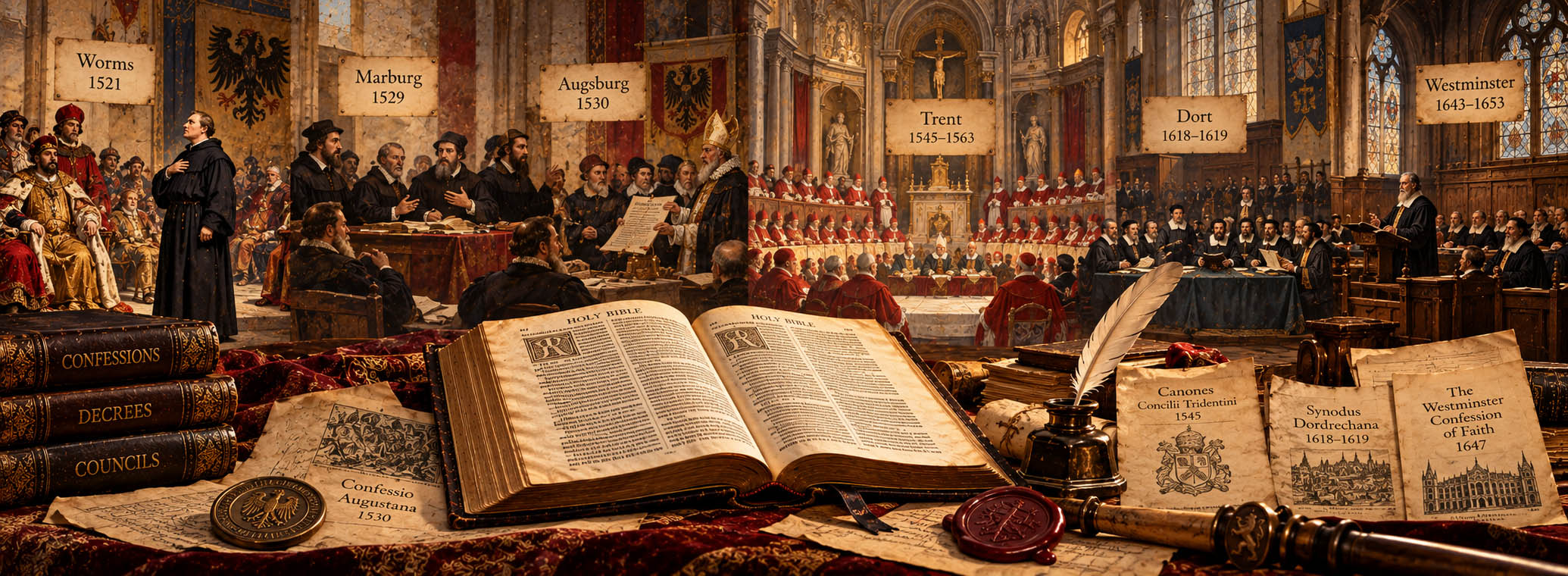
Explore the councils, diets, colloquies, and synods that shaped the Protestant Reformation, arranged in chronological order.
Dispute de Rive (1535)
Dispute de Rive (1535): Geneva before Calvin. A concise account of the debate and its place in the Protestant Reformation.
God
How the Reformation restored God to the center of faith and life through Scripture, challenging the medieval synthesis and human autonomy.
Gospel Missions
How vernacular preaching, Geneva, early overseas efforts, and Reformation theology helped prepare the modern Protestant missionary movement.
Holy Orders
Holy Orders in Roman Catholic teaching: the sacrificing priesthood, the seven orders, the delivery of the instruments, celibacy, Trent and the Catechism, and the answer of Luther, Calvin, and Scripture.
Holy Orders
Holy Orders in Roman Catholic teaching: the sacrificing priesthood, the seven orders, the delivery of the instruments, celibacy, Trent and the Catechism, and the answer of Luther, Calvin, and Scripture.
Impact on Civics
How Reformation ideas shaped limited government, checks and balances, resistance theory, federalism, written constitutions, and American political thought.
Impact on Commerce
How the Reformation reshaped commerce through vocation, moral accountability in work, property, lending, thrift, and service to one’s neighbor.
Impact on Culture
How vernacular Bibles, psalm singing, worship, visual art, national languages, and sacred music reshaped Western culture after the Reformation.
Impact on Education
How the Reformation’s demand for biblical literacy produced schools, academies, parish education, and a broad Protestant commitment to learning.
Impact on Society
How the Reformation reshaped marriage, family, poor relief, the diaconate, work, and communal discipline in Western society.
Indulgences
The Roman doctrine of indulgences and the controversy that led Luther to post the Ninety-Five Theses in 1517.
Indulgences
The Roman doctrine of indulgences and the controversy that led Luther to post the Ninety-Five Theses in 1517.
Jacopo Sadoleto
The eloquent cardinal whose letter urging Geneva back to Rome drew Calvin’s classic Reply in 1539.
John Calvin
A biography of John Calvin, the Genevan Reformer, drawn from his life and writings.
John Calvin and Swiss Reform
A historical map locating John Calvin and the principal cities, territories, and events of the Swiss Reformation.
John Calvin’s Travels
An interactive chronological map of John Calvin’s travels from Noyon and Paris through exile, Strasbourg, and Geneva.
Law and Gospel
How the Reformation distinction between law and gospel clarifies Scripture, exposes sin, announces Christ, and directs the Christian life.
Lutheran versus Reformed
A comparison of Lutheran and Reformed traditions on Christology, worship, sacraments, covenant, law and gospel, and salvation.
Map of Major Reformers
A map locating major Protestant reformers and the European cities and regions most closely associated with their work.
Maps
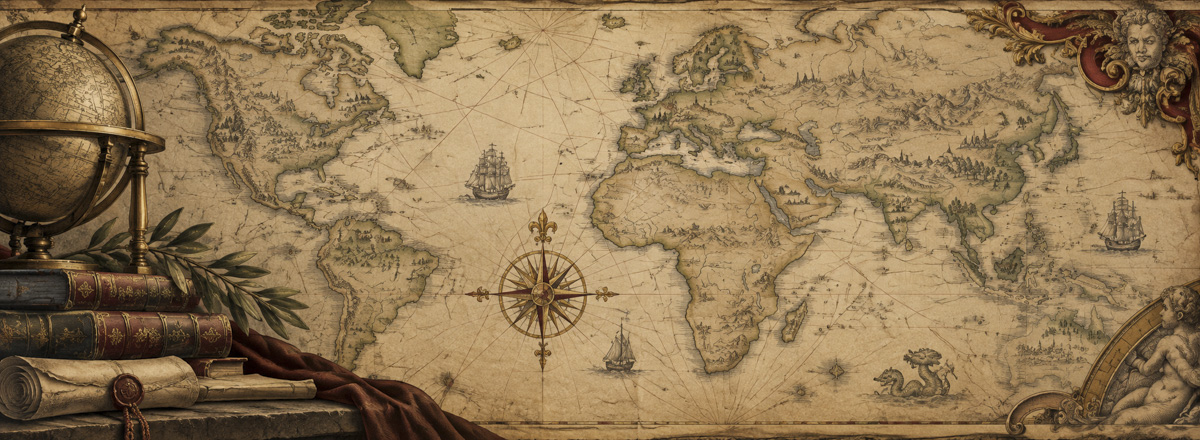
An index of Reformation maps tracing reformers’ journeys, major locations, regional movements, and important events across Europe.
Martin Bucer
A short biography of Martin Bucer (1491–1551), reformer of Strasbourg, peacemaker among the Protestants, mentor of John Calvin, and Regius Professor of Divinity at Cambridge.
Mortal and Venial Sins
Rome's distinction between mortal and venial sin, in the words of the Catechism and the Council of Trent, set beside the answer of Calvin, the Westminster Standards, and the Puritans: every sin deserves death, and the blood of Christ cleanses from all sin.
Mortal and Venial Sins
Rome's distinction between mortal and venial sin, in the words of the Catechism and the Council of Trent, set beside the answer of Calvin, the Westminster Standards, and the Puritans: every sin deserves death, and the blood of Christ cleanses from all sin.
Pierre de la Baume
Geneva’s worldly last prince-bishop, whose flight from the city in 1533 opened the way for Farel and Calvin.
Pierre Robert Olivétan
A short biography of Pierre Robert Olivétan (d. 1538), Calvin’s cousin, the first evangelist of Geneva, and translator of the first French Protestant Bible of 1535.
Pierre Viret
A short biography of Pierre Viret (1511–1571), the gentle reformer of Lausanne, friend of Farel and Calvin, and the most sought-after Protestant preacher of the Huguenot churches of southern France.
Purgatory
The Roman doctrine of purgatory, its place in the medieval system of indulgences, and the Reformers’ scriptural response.
Purgatory
The Roman doctrine of purgatory, its place in the medieval system of indulgences, and the Reformers’ scriptural response.
Purity
How the Reformation located holiness after justification, joining sanctification to grace, union with Christ, faith, love, and daily repentance.
Purpose
How the Reformation recovered humanity’s chief end: to glorify God and enjoy Him through worship, vocation, obedience, and life in Christ.
Reformation Wall
An interactive presentation and visitor reference for Geneva's Reformation Wall, commemorating leading figures and events of the Protestant Reformation.
Reformers
Profiles of the Reformers, a Reformation larger than any one man, group, or movement.
Roman Catholic Justification
The doctrine of justification as the central issue between Rome and the Reformers, on which every other difference rests.
Roman Catholic Justification
The doctrine of justification as the central issue between Rome and the Reformers, on which every other difference rests.
The Belgic Confession (1561)
An introduction to the Belgic Confession of 1561, with attention to Guido de Bres, persecution in the Low Countries, its Reformed influences, enduring legacy, and Christ-centered gospel.
The Colloquy of Regensburg
The Colloquy of Regensburg (1541): Charles V’s attempt to reunite Protestants and Catholics, the agreed article on justification, the break over the church and the Mass, and Calvin’s warning against a “half-Christ.”
The Council of Geneva
The Council of Geneva of 1536: the Dispute de Rive, the suspension of the mass, and the vote of 21 May 1536 by which the citizens of Geneva swore to live according to the Gospel and the Word of God — two months before Calvin arrived.
The Diets of Speyer
The Diets of Speyer (1526 and 1529): the Word of the Lord endures forever, the recess that let each state answer to God, the Protestation that named the Protestants, and Calvin’s plea at Speyer in 1544.
The Geneva Catechism
Calvin's Geneva Catechism of 1541: why his first catechism failed, the decisive reordering of faith before law, the four parts, the famous first question, and its influence on the Heidelberg and Westminster catechisms.
The Papacy
The papacy examined: Rome's claims for Peter and his successors, Matthew 16:18, the rise of the Roman see, papal infallibility, its corruptions, and the answer of Scripture and the Reformers.
The Papacy
The papacy examined: Rome's claims for Peter and his successors, Matthew 16:18, the rise of the Roman see, papal infallibility, its corruptions, and the answer of Scripture and the Reformers.
The Priesthood of All Believers
How the Reformation recovered the priesthood of all believers while preserving the pastoral ministry and Christ’s unique high priesthood.
The Reformation in France
A concise history of the French Reformation, including Lefèvre, Calvin, the Huguenots, persecution, religious wars, and the Edict of Nantes.
The Westminster Shorter Catechism
The Westminster Shorter Catechism of 1647: the Assembly that produced it, its two halves, and a close reading of the first question — eleven words that have shaped Reformed piety for four centuries.
Theodore Beza
A short biography of Theodore Beza (1519–1605), rector of the Academy of Geneva, biographer and successor of John Calvin, and counselor of the Huguenots.
Theology of the Cross
Luther’s theology of the cross from the Heidelberg Disputation, contrasting God’s revelation in Christ crucified with the theology of glory.
Truth
How the Reformation related truth, revelation, reason, and authority by restoring Scripture above human tradition and autonomous thought.
Union with Christ
How union with Christ joins justification and sanctification as the double grace received by faith through the Holy Spirit.
Vocation
How Luther, Calvin, and Tyndale recovered ordinary callings as sacred service to God and neighbor flowing from justification by faith.
Where Christ Is Found
How Luther, Calvin, Tyndale, and the Reformation confessions identified the true church by Word, sacrament, and discipline.
Who?
Who brought about the Reformation: the men and women God raised up, and the God who raised them.
William Farel
A short biography of William Farel (1489–1565), the fiery evangelist of French-speaking Switzerland who won Neuchâtel and Geneva for the Reformation and held John Calvin in Geneva in 1536.
World Impact
An introduction to the Reformation’s far-reaching effects on education, government, commerce, culture, society, and the development of the modern West.
Worldview Matters
How the Reformation transformed basic beliefs about God, humanity, truth, purpose, and redemption by returning to Scripture.
