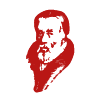
The Hussites
 n July 6, 1415, outside the walls of Constance, a Bohemian preacher who had come to the council
under an emperor’s safe conduct knelt beside the pile of wood that had been built for him and
prayed:
Lord Jesus, I cheerfully suffer this terrible and cruel death, for the sake of Thy holy gospel, and the preaching of Thy sacred Word. Do Thou forgive my enemies the crime they are committing.1 Jan Husat the stake, Constance, 1415
The council burned Hus, and soon afterward his friend Jerome of Prague. It did not burn what they had taught. Bohemia rose, defeated the crusades sent against it, and for two centuries kept a church that gave the cup to the people, preached in the Czech tongue, and would not bow to Rome. When Luther came, he found that Bohemia had been there before him.
Like the page on the Waldensians, this brief page follows the chart “Pre-Reformation Movements” in Church History Charts. The life of Hus himself is told on the page Jan Hus.
Rise and Background
The seed came from England. When Anne of Bohemia, the wife of Richard II, died in 1394 and her household returned home, the books of John Wycliffe went with them and came into the hands of Jan Hus and Jerome of Prague.2 From the pulpit of Bethlehem Chapel in Prague, Hus preached in Czech against the sale of indulgences, the wealth and immorality of the clergy, and the pretensions of a papacy then divided among rival popes. He revised a Czech translation of the Bible and taught the people to sing in worship.3 George Abbot, drawing on the Catholic chronicler Cochlaeus, records that the craftsmen of Prague read the Scriptures in their own tongue “so that they could dispute with the Priests; which the very women were able to do.”4
Summoned to the Council of Constance, Hus went under the safe conduct of the Emperor Sigismund, and was imprisoned, condemned, and burned. The nobles of Bohemia had sent the council “two several and solemn supplications” on his behalf, and when he and Jerome were burned, “contrary to the Emperors safe conduct,” the kingdom erupted.5 The furious reaction that followed, James Dennison notes, has been called the Hussite Revolution or “First Reformation,” and it was “as much nationalistic as theological.”6
Notable Facts
- The cup. The badge of the movement was the chalice. Abbot reports that after Hus’s death the Bohemians gathered “to the number of thirty thousand; and in the fields upon three hundred Tables erected for that purpose, they received the Eucharist in both kinds.”7 The moderate party took its names from it: Utraquists, from sub utraque specie, “under the one kind and the other,” and Calixtines, from calix, “cup.”8
- Two parties. The followers of Hus split into factions, chiefly the Utraquists and the Taborites.9 The Taborites, named for Tabor, the town built by the general Jan Žižka, “were the greater number, and the stronger,” and differed from Rome in more points than the others.10
- Crusades against them. Five crusades were directed against the Hussites.11 Pope Martin V promised remission of sins to those who would destroy them, yet under Žižka and Procopius the Bohemian armies won victory after victory. Even Cochlaeus, the enemy of Hus and Luther, said that “scant any History of the Greeks, or Hebrews, or Latins doeth mention such a General as Zizka was.”12
- A compromise with Rome. The Compactata of Prague (1433), acknowledged at the Council of Basel in 1436, granted the Bohemian laity the cup, in direct contradiction of what Constance had decreed.13
- A Hussite king. George of Poděbrady, “borne and brought up in the heresy of the Hussites,” was chosen king of Bohemia, swore at Prague in 1462 to live and die in the Compactata, and was excommunicated by Pope Paul II, who raised a crusade against him.14
- Kinship with other dissenters. The Hussites were influenced by the Waldensians, especially at Tabor; and in 1431 a Bohemian Wycliffite, Paul Craw, was burned at St. Andrews in Scotland.15
- The Brethren. In 1467 the Unitas Fratrum, the Unity of the Brethren, separated from both Utraquists and Catholics and established its own ministry.16 The chart notes that this tradition is perpetuated today in the Moravian Church.17
Characteristic Teaching
The chart summarizes the Hussite emphases: the authority of Scripture over the church, the cup for the laity, Scripture read in the vernacular, and the denial of transubstantiation, the veneration of saints, indulgences, and auricular confession.18 Aeneas Sylvius, who traveled in Bohemia and later became Pope Pius II, reduced their program to four points, the substance of what are known as the Four Articles of Prague: “That they would receive the Sacraments in both kinds; that civil dominion is inhibited to Clergy men; that Preaching of the Word was permitted to all men; that public crimes are in no sort to be tolerated.”19
The parties differed in how far they went. Of the Taborites, Cochlaeus reported that they held “that material bread doth remain in the Sacrament; that the Saints now triumphant are not to be called upon; that there is no purgatory; that no suffrages or prayers are to be made for the dead.”20 Even the moderate Utraquist John Příbram, who thought the Taborites “a kind of Precisians, or Puritans,” prayed for the reform of a church whose clergy he charged with “their most open transgression of all the Commandments of God, their most remiss care of souls, their most negligent regard of the word of God.”21
By the sixteenth century the Unity of the Brethren had come to a clear confession of the gospel. Their confession of 1535 sets the doctrine of justification at its center:
They go on in their teaching to say that men are justified before God only by faith or confidence in Jesus Christ, without any efforts, merits, or works of their own. … And this Sixth Article is regarded among us all as the main one by far, since it is the sum of all Christianity and piety.22 The Bohemian Confession1535
Connection to the Protestant Reformation
A century after Constance, the Reformation found the Hussites waiting. At the Leipzig Disputation in July 1519, John Eck charged Luther with holding the condemned articles of Hus. Luther denied it, examined the records of Constance over the lunch break, and found that Eck was right. In the afternoon, as Timothy George puts it, he declared “in effect: ‘Ja, ich bin ein Hussite!’”23 Correspondence followed between Wittenberg and the leaders of Prague, and in 1524 the Utraquist synod endorsed Luther’s sola Scriptura and his rejection of the Mass as a sacrifice.24
The Brethren drew closer still. Their confession of 1535 was modeled on the Augsburg Confession, and Luther himself wrote a foreword to its Latin edition in 1538. Contacts with Bucer and Calvin followed, and in time, Dennison notes, “more students from Bohemia studied in Geneva, Strasbourg, and Heidelberg than in Wittenberg.” The more Reformed Bohemian Confession of 1575 was approved by the Bohemian Diet on May 17, 1575, and the Letter of Majesty of July 9, 1609 granted the Brethren full toleration. It lasted only until the Thirty Years’ War, after which Protestantism in Bohemia was suppressed until 1781.25
Protestant writers in England saw the Hussites as proof that the gospel had never wholly perished. Archbishop Abbot answered the Roman taunt of novelty by tracing Hussite belief through Cochlaeus himself:
What can be more evident, then that the Doctrine of John Hus was sensibly and apparently continued somewhere, even till the days of Martin Luther?26 George AbbotArchbishop of Canterbury, 1624
The goose of Bohemia, as Hus was called after the meaning of his name, was roasted at Constance. A century later the Reformation came. The Lord who let His servant die singing in the fire did not let His Word be bound. What Hus preached in Bethlehem Chapel, the Brethren confessed in 1535: that sinners are justified before God “only by faith or confidence in Jesus Christ.”