
Scripture
After Light, Darkness
A survey of the theological and institutional developments that carried the church from apostolic light into the darkness preceding the Reformation.
Authority
How the Reformation opposed human autonomy and ecclesiastical tradition by restoring Scripture as the church’s supreme authority.
Buried with Him, Raised with Him
A history of the Particular Baptists from their Reformation roots through the recovery of immersion and the Second London Confession of 1689.
Faith and Works
What Scripture means by works, and why Rome insists that good works merit grace and eternal life in addition to faith, set against Ephesians 2:8-9, Psalm 49:7-8, Romans 3:24 and 11:6, and the five solas of the Reformation.
Faith and Works
What Scripture means by works, and why Rome insists that good works merit grace and eternal life in addition to faith, set against Ephesians 2:8-9, Psalm 49:7-8, Romans 3:24 and 11:6, and the five solas of the Reformation.
Free or Fettered?
A biblical and theological study of human choice under sin and grace, relating moral responsibility to God’s sovereignty and renewing grace.
From Catholicism to Christ
A guide for Christians seeking to speak with Roman Catholic family and friends with care, patience, and a clear grasp of the gospel.
From Catholicism to Christ
A guide for Christians seeking to speak with Roman Catholic family and friends with care, patience, and a clear grasp of the gospel.
Ilanz Disputation (1526)
Ilanz Disputation (1526): A parish’s freedom to choose. A concise account of the debate and its place in the Protestant Reformation.
Law and Gospel
How the Reformation distinction between law and gospel clarifies Scripture, exposes sin, announces Christ, and directs the Christian life.
Preaching
Why the Reformation restored biblical preaching to the center of worship and treated the proclaimed Word as essential to the life of the church.
Relics
The Roman Catholic veneration of relics: what relics are, how the medieval councils and Trent regulated them, Frederick the Wise's collection at Wittenberg, and the Reformers' answer from Scripture.
Relics
The Roman Catholic veneration of relics: what relics are, how the medieval councils and Trent regulated them, Frederick the Wise's collection at Wittenberg, and the Reformers' answer from Scripture.
Rome’s View of the Church’s Role
How Rome's claims for the Church's role in justification, grace, and authority divided Rome from the Reformation churches, set beside what Scripture teaches.
Rome’s View of the Church’s Role
How Rome's claims for the Church's role in justification, grace, and authority divided Rome from the Reformation churches, set beside what Scripture teaches.
Scripture Comparison
A side-by-side comparison of Roman Catholic and Reformation teaching on Scripture.
Scripture Comparison
A side-by-side comparison of Roman Catholic and Reformation teaching on Scripture.
Scripture Unsilenced
Five hundred years after the first printed English New Testament (1526): William Tyndale’s consuming conviction, Bibles in bales, the Word before the congregation, the cost, the prayer answered, and our stewardship today.
Short Pointers on Rome and the Reformation
Ten short pointers on Rome and the Reformation: material and formal sufficiency, tradition, Nicodemism, penance, the Church, Newman's two decisions, the real difference, the shared heritage, saved or being saved, and gift and reward.
Short Pointers on Rome and the Reformation
Ten short pointers on Rome and the Reformation: material and formal sufficiency, tradition, Nicodemism, penance, the Church, Newman's two decisions, the real difference, the shared heritage, saved or being saved, and gift and reward.
Sola Scriptura
An explanation of sola Scriptura: the written Word of God is the church's supreme and sufficient authority for faith and life.
The Church
An overview of the Reformation’s recovery of the church through the gospel, Scripture, sacraments, discipline, worship, polity, and mission.
The Council of Trent
The Council of Trent, 1545 to 1563: Rome's answer to the Reformation. Its three periods, the decree on Scripture and tradition, the decree on justification and its anathemas, the abuses it genuinely reformed, and the Protestant replies of Calvin and Chemnitz.
The Council of Trent
The Council of Trent, 1545 to 1563: Rome's answer to the Reformation. Its three periods, the decree on Scripture and tradition, the decree on justification and its anathemas, the abuses it genuinely reformed, and the Protestant replies of Calvin and Chemnitz.
The Coverdale Bible
The story of Miles Coverdale and the first complete printed English Bible, published in 1535 from German and Latin sources.
The Enduring Word: A Call to Stewardship
A reflection on The Enduring Word documentary, God’s providence from William Tyndale to the English Standard Version, and our stewardship of Scripture today.
The Five ‘Solas’
An introduction to the five solas as concise summaries of the Reformation gospel: Scripture alone, grace alone, faith alone, Christ alone, and glory to God alone.
The Gospel
The Reformation as God’s gospel recovery mission.
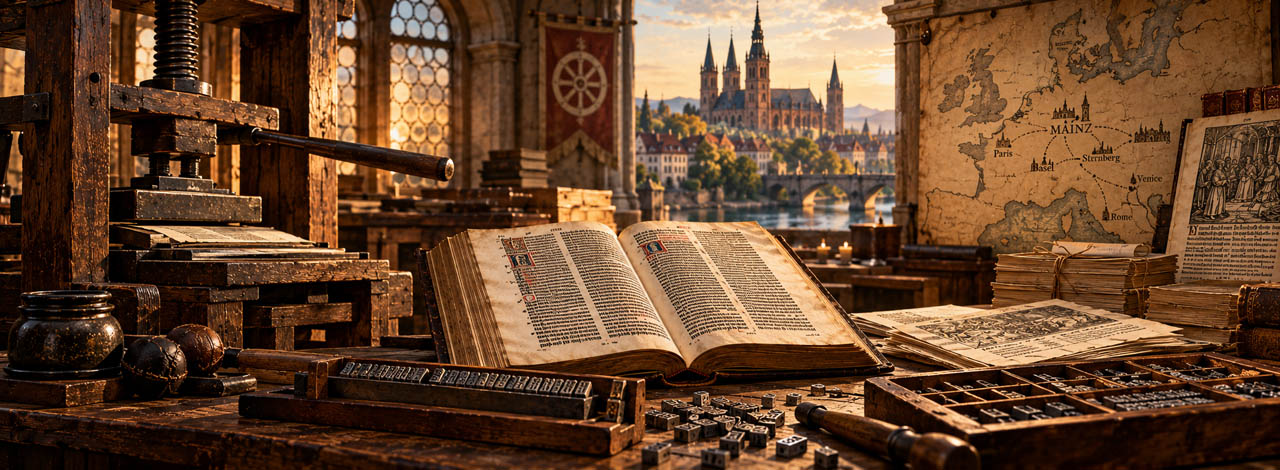
The Gutenberg Press
How Gutenberg’s printing press became a providential instrument for spreading Scripture, literacy, and the ideas of the Protestant Reformation.
The Huguenots
A history of the French Huguenots, their confession and discipline, wars and massacres, the Edict of Nantes, exile, and the Church of the Desert.
The Jesuits
The Society of Jesus: Ignatius of Loyola, the Spiritual Exercises, the Jesuits at Trent, their schools and missions, the English mission, and the Reformation response.
The Jesuits
The Society of Jesus: Ignatius of Loyola, the Spiritual Exercises, the Jesuits at Trent, their schools and missions, the English mission, and the Reformation response.
The Latin Vulgate
An appreciation and critical assessment of Jerome’s Latin Vulgate, its medieval authority, and its complex role in Western Christianity.
The Lollards
A history of Wycliffe’s Lollards, their preaching and English Scriptures, persecution, leading witnesses, and survival into the English Reformation.
The Papacy
The papacy examined: Rome's claims for Peter and his successors, Matthew 16:18, the rise of the Roman see, papal infallibility, its corruptions, and the answer of Scripture and the Reformers.
The Papacy
The papacy examined: Rome's claims for Peter and his successors, Matthew 16:18, the rise of the Roman see, papal infallibility, its corruptions, and the answer of Scripture and the Reformers.
The Second Helvetic Confession
The Second Helvetic Confession of 1566: Bullinger's private testament that became the most widely adopted of the Continental Reformed confessions, its thirty chapters, and its great sentence on the preaching of the Word of God.
Traditions
The question of final authority between Rome and the Reformers: Scripture alone or Scripture with tradition and the church.
Traditions
The question of final authority between Rome and the Reformers: Scripture alone or Scripture with tradition and the church.
Truth
How the Reformation related truth, revelation, reason, and authority by restoring Scripture above human tradition and autonomous thought.
Zürich Disputations (1523)
Zürich Disputations (1523): Scripture before the city council. A concise account of the debate and its place in the Protestant Reformation.
