
Scotland
Catholic Opponents of the Reformation
The major Roman Catholic opponents of the Protestant Reformation: popes, princes, bishops, inquisitors, and theologians, with a short biographical sketch of each.
Columba
The Irish monk who founded Iona and carried the gospel to the Picts and Scots.
David Beaton
The cardinal who had George Wishart burned at St. Andrews in 1546 and was murdered there in revenge.
James Beaton
The Archbishop of St. Andrews who had Patrick Hamilton burned in 1528, Scotland’s first martyr of the Reformation.
John Hamilton
The last Catholic Archbishop of St. Andrews, who burned the aged Walter Myln in 1558 and opposed the Reformation Parliament of 1560.
John Knox
A biographical sketch of John Knox (c. 1514–1572): Wishart’s bodyguard, galley slave, chaplain to Edward VI, pastor in Geneva, and reformer of Scotland.
Mary of Guise
The French queen-regent of Scotland whose struggle with John Knox and the Protestant lords ended with her death in 1560.
Other Reformers
Many were the hands and hearts that contributed to the Reformation. Here are a few other prominent reformers, arranged by the lands where they chiefly labored.
Patrick Hamilton
A brief biographical sketch of Patrick Hamilton (c. 1504–1528), author of Patrick’s Places and the first martyr of the Scottish Reformation.
Rise of Presbyterianism
The rise of English Presbyterianism through Cartwright, the Admonition, the classical movement, Hampton Court, and the Westminster Assembly.
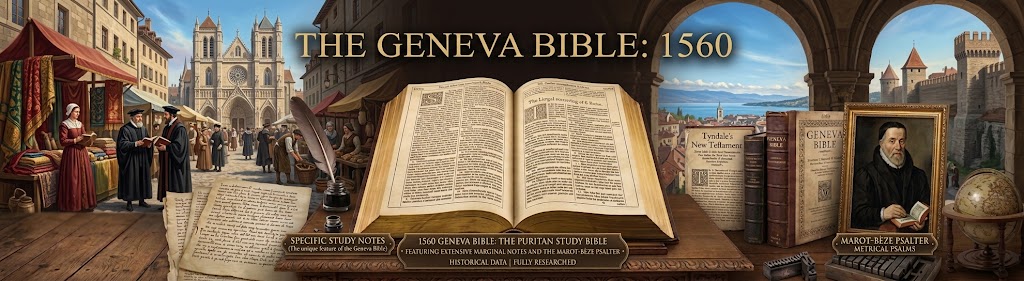
The Geneva Bible
The history, translation, notes, and enduring influence of the Geneva Bible of 1560, the study Bible of English Puritans and Pilgrims.
The Reformation in Scotland
A concise history of the Scottish Reformation, including George Wishart, John Knox, conflict with the crown, and the establishment of Presbyterianism.
The Scots Confession
The Scots Confession of 1560: the six Johns who wrote it in four days, John Knox's part in it, the twenty-five chapters, the marks of the true Kirk, and why this confession founded Scottish Presbyterianism.
The Scottish Reformation
A history of the Scottish Reformation and the Church of Scotland from Knox and 1560 through the Covenanters, secessions, unions, and settlement of 1929.
The Westminster Assembly
The Westminster Assembly, 1643 to 1653: called by the Long Parliament in the middle of a civil war, 1,163 sessions in the Jerusalem Chamber, four contending parties, and the standards that failed in England and governed Presbyterianism everywhere else.
The Westminster Larger Catechism
The Westminster Larger Catechism of 1647: Anthony Tuckney's masterpiece, written before the Shorter, with the fullest exposition of the Ten Commandments in any confessional document and the classic treatment of preparing for the Lord's Table.
The Westminster Shorter Catechism
The Westminster Shorter Catechism of 1647: the Assembly that produced it, its two halves, and a close reading of the first question — eleven words that have shaped Reformed piety for four centuries.
Westminster Confession of Faith (1646/1647)
An introduction to the Westminster Confession of Faith (1646/1647): its background in the struggle between King and Parliament, its place in the long English and Scottish Reformation, the convictions that drove it, and what it cost the men who made and kept it.
