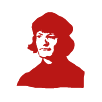
Peter Martyr Vermigli
 eter Martyr Vermigli was the most learned of the Italians who left their country for the gospel. A prior and preacher of the Augustinian canons, he fled the Inquisition in 1542 and became professor of theology at Strasbourg, Oxford, and Zurich. In the English Reformation he stood beside Cranmer, and in the Reformed churches his writings were ranked next to Calvin’s. The Scottish historian Thomas M’Crie wrote:
Of all the Italian exiles none left behind him a fairer and better-earned fame than Peter Martyr. He possessed eminently the good qualities of his countrymen without the vices which have been ascribed to them; acuteness without subtlety, ardour without enthusiasm, and dexterity without cunning.1 Thomas M’CrieHistory of the Reformation in Italy (1827)
Florence and Padua
He was born in Florence in 1499 or 1500, the son of Stefano Vermigli, and was named for the medieval saint Peter Martyr. His mother, Maria Fumantina, taught him Latin as a small child.2, 3 Against his father’s wishes, and at the cost of his inheritance, he entered the house of the Augustinian canons regular at Fiesole in 1516. At Padua he studied philosophy, Greek, and the Fathers, and began to see “that the theology of primitive catholicism was quite different from that of the papacy.” He learned Hebrew from a Jewish physician named Isaac at Bologna, and as he read the Scriptures in the original tongues, says Merle d’Aubigné, “the Spirit of God opened his understanding.”2 From 1526 he preached in the great cities of Italy. He became abbot of Spoleto and, in 1530, prior of San Pietro ad Aram in Naples.2, 1
Naples and Lucca
At Naples he joined the circle of the Spanish evangelical Juan de Valdés and read Bucer, Zwingli, Luther, and Melanchthon. Zwingli’s treatise on true and false religion showed him “the necessity of returning to the simplicity and primitive customs of the Church.”4 Preaching on 1 Corinthians 3 before a large congregation, he denied that purgatory could be built on the foundation laid by Paul. He was forbidden to preach, and only the influence of friends at Rome, among them Cardinals Pole and Contarini, had the ban lifted.4, 5 In 1541 he became prior of San Frediano at Lucca and gathered there a school of learned teachers in Latin, Greek, Hebrew, and theology.5 When Rome ordered the arrest of heretics in 1542, he left Italy. Eighteen members of his order followed him out of Lucca. He took as his guide the words of Christ, “When they persecute you in this city, flee ye into another.”3, 5
Strasbourg and Oxford
With Bernardino Ochino he crossed the Alps. At Strasbourg, on the recommendation of Martin Bucer, he succeeded Wolfgang Capito as professor of theology. There he married Catherine Dampmartin, a former nun from Metz.5, 3 In 1547 Archbishop Cranmer invited him to England, and he became Regius Professor of Divinity at Oxford.1, 5 In 1549 he defended the Reformed doctrine of the Lord’s Supper in a public disputation of several days, and the hostility it roused put his life in danger.3, 5 He influenced Cranmer’s views on the Supper, assisted in the revision of the Prayer Book of 1552, and worked with Cranmer on a reform of the church’s laws. Hooper and Coverdale attended his lectures.3, 5
When Mary Tudor came to the throne he was held in his house for six weeks and then allowed to leave. His wife had already died. In 1557 the Catholic authorities at Oxford dug up her body and threw it on a dunghill; under Elizabeth it was reburied in the cathedral at Oxford, mingled with the bones of St. Frideswide so that it could not be disturbed again.5, 3
Zurich
He returned to Strasbourg, but Lutheran opposition to his teaching on the Supper made his position difficult. In 1556 he accepted the chair of Hebrew at Zurich in succession to Conrad Pellikan, and there he spent his happiest years beside Heinrich Bullinger. He declined calls to the Italian church at Geneva and back to England.1, 5 At Zurich he taught the young Zacharias Ursinus, and when the Elector Frederick III asked him to come to Heidelberg, he sent Ursinus in his place.3 In 1561 he went to France for the Colloquy of Poissy, where, with Theodore Beza, he set out the Reformed faith before the queen mother, Catherine de’ Medici, speaking to her in Italian.5
He died at Zurich on November 12, 1562. M’Crie writes that Bullinger, “who loved him as a brother, closed his eyes,” while the pastor and elders of the Italian church wept around his bed.1 His best known work was his defense of the Reformed doctrine of the Lord’s Supper against Bishop Stephen Gardiner.5
Cautions
Beeke and Kleyn give his birth as September 8, 1499; Merle d’Aubigné, M’Crie, and Hagstotz give 1500. M’Crie’s editor places Lucca “on the Lake of Genoa,” which is a slip. Hagstotz describes his teaching at Lucca as treating the Supper as “merely emblematical,” but his mature doctrine at Oxford was that Christ is truly received by faith, the view Cranmer and Ridley came to share. Hagstotz dates his wife’s death to 1553, Beeke and Kleyn to 1551. His companion Ochino later drifted into heterodox opinions and should not be confused with Vermigli.6