The King James Version
No book has done more for the English-speaking peoples. For three centuries it was simply called the Bible, and no one asked which one. It was read at coronations and at gravesides, in cathedrals and in slave cabins, by firelight in Scottish crofts and by lamplight on American frontiers. Children learned to read from it. Poets learned to write from it. Preachers learned to thunder from it. Dying men whispered its cadences when they could remember nothing else.
And it came about almost by accident — requested by a defeated Puritan at a conference designed to humiliate him, granted by a king who wanted a Bible without Calvinist notes, sneered at by the bishop who oversaw it, and produced by forty-seven scholars working in cold stone rooms for very modest pay, none of whom imagined he was making a monument of the English tongue.
That is how God works. The Word that could not be silenced by fire was not going to be silenced by the small motives of the men who handled it. He took a royal grudge and a scholarly grind and out of them gave the English world a Bible so plain that a plowboy could read it and so majestic that four hundred years of poets have not exhausted it.
Translation it is that openeth the window, to let in the light; that breaketh the shell, that we may eat the kernel; that putteth aside the curtain, that we may look into the most holy place; that removeth the cover of the well, that we may come by the water. Preface, 1611
The Inheritance It Received
The King James Version did not begin in 1604. It is the ripened fruit of two and a half centuries of English labor, most of it illegal, much of it paid for in blood.
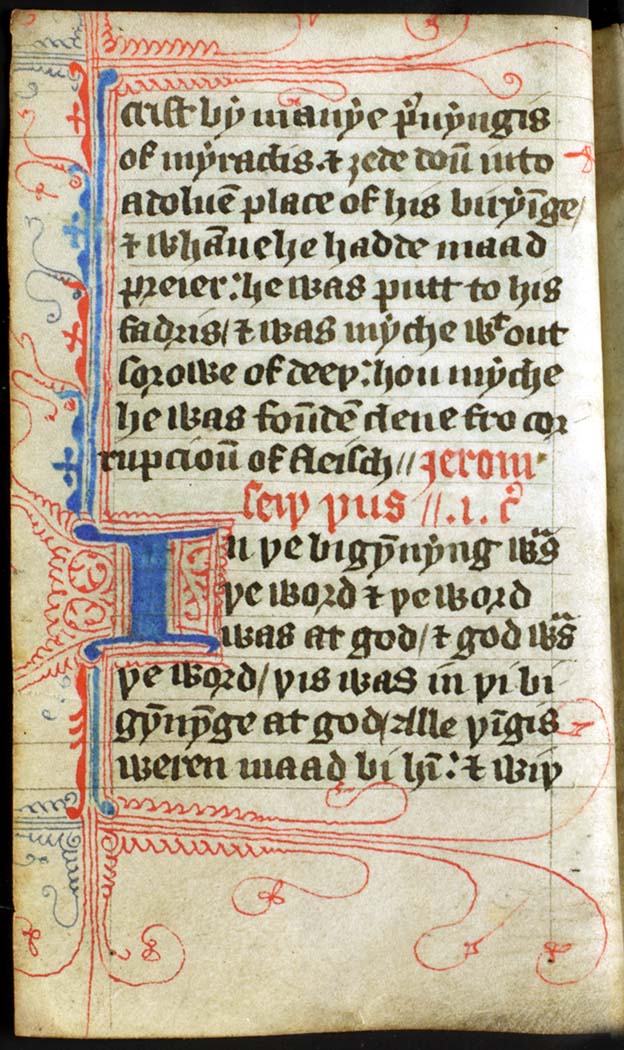
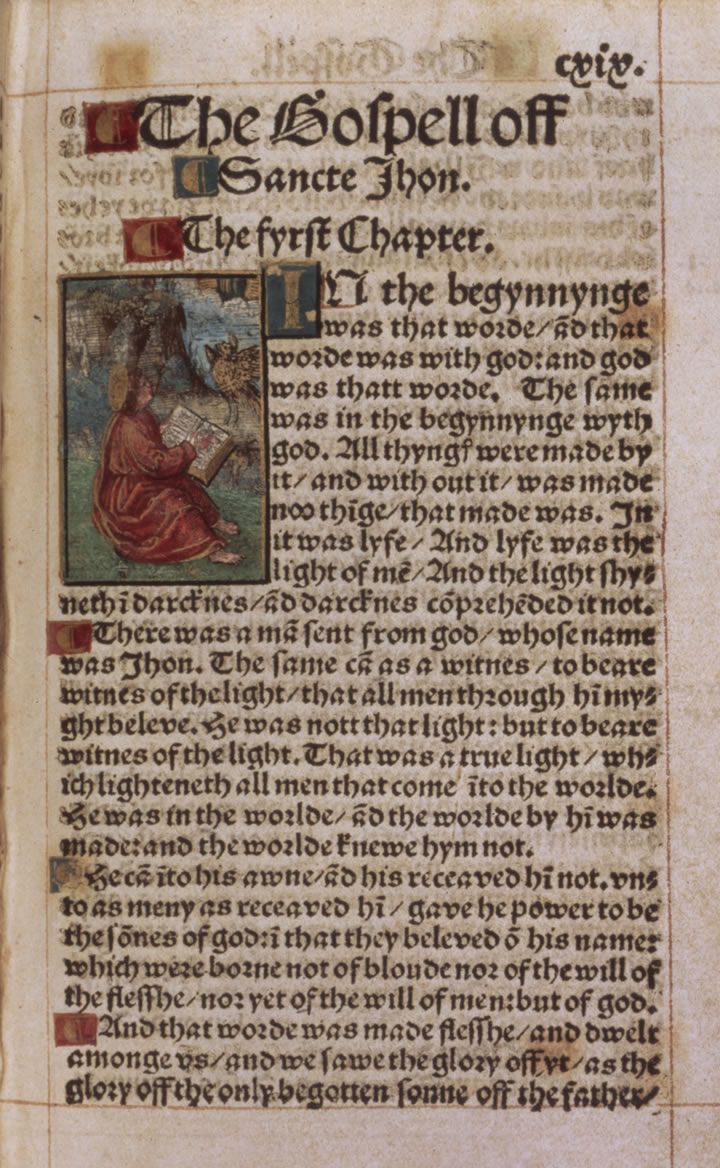
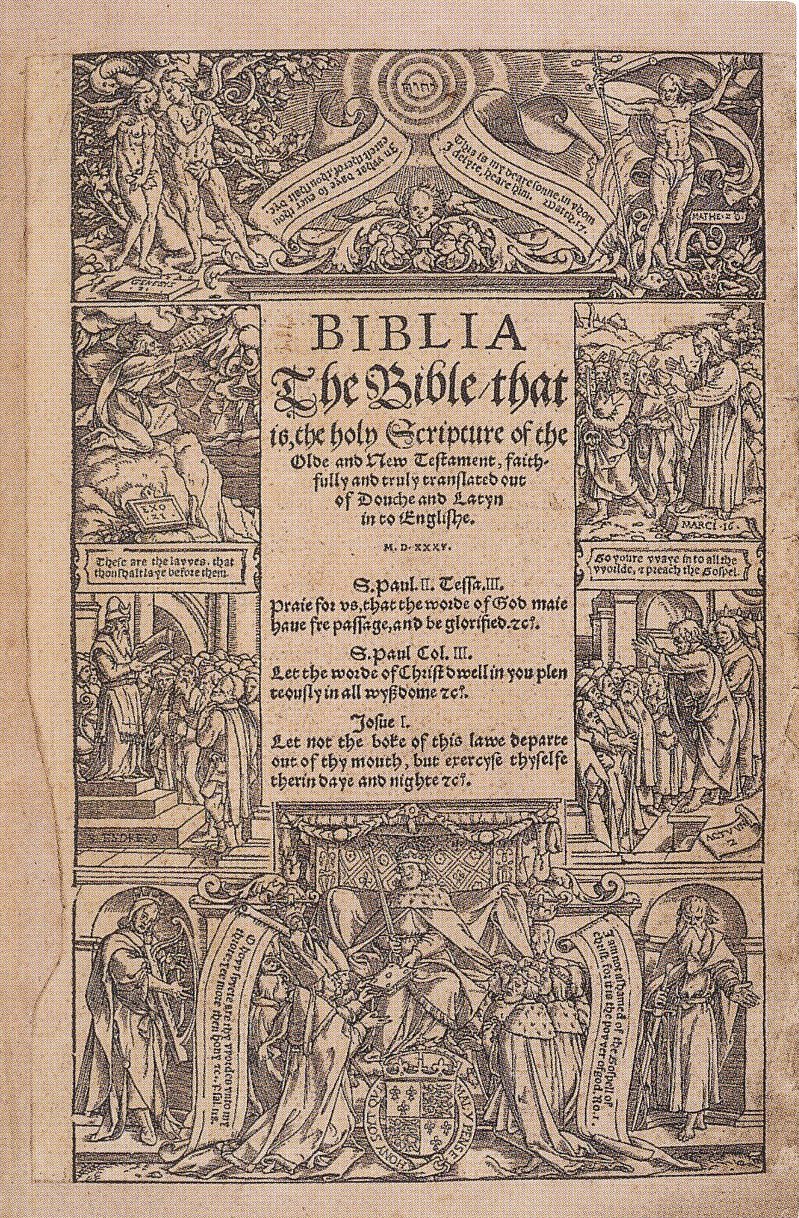
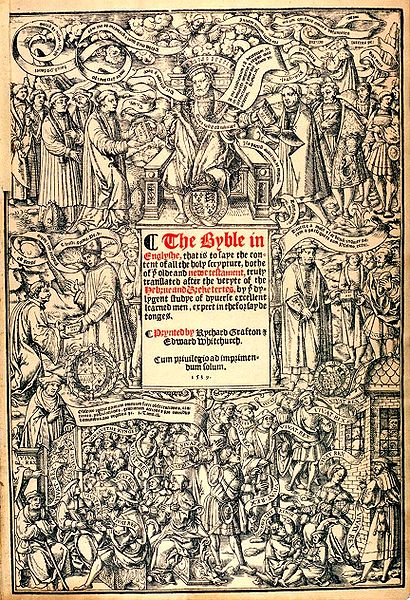
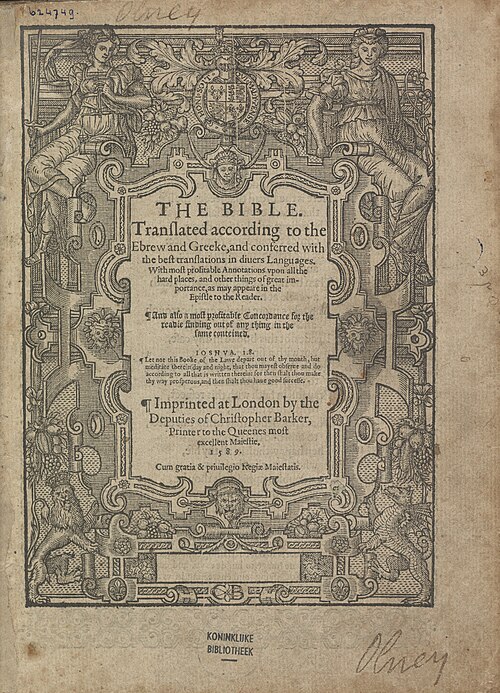
Wycliffe’s men gave England a complete Bible from the Latin about 1382, and Purvey revised it in 1388. Tyndale gave England its first printed New Testament from the Greek in 1526, and paid for it at a stake outside Brussels. Coverdale completed the first whole printed English Bible in 1535. Rogers assembled Matthew’s Bible in 1537 under a false name, and Henry VIII licensed it without grasping that he was licensing Tyndale. Coverdale revised that into the Great Bible of 1539, chained in every parish church. The Marian exiles produced the Geneva Bible in 1560 — the first English study Bible, and the Bible of the English people for three generations. Archbishop Parker answered it with the Bishops’ Bible in 1568.
Every one of those labors flowed into 1611. The King James translators said so themselves, and said it without a trace of the vanity that would have been so easy:
Truly, good Christian Reader, we never thought from the beginning that we should need to make a new translation, nor yet to make of a bad one a good one … but to make a good one better, or out of many good ones one principal good one.1 Preface, 1611
Consider what that sentence cost them in credit, and how gladly they paid it. They were the finest Hebraists and Hellenists in England, commissioned by a king, and they introduced their life’s work by insisting it was not new. Here is the humility of men who knew they stood on the shoulders of martyrs.
Hampton Court, January 1604
Elizabeth died in 1603 and the Scottish James VI came south as James I of England. The Puritan party had reason to hope: as king of Scotland he had once dismissed high-church Anglicanism with a contemptuous verdict about an ill-mumbled Mass in English. As his procession moved toward London, Puritan leaders met him with the Millenary Petition, so called because it claimed the backing of a thousand clergy, asking that the Catholic trappings of the Church of England be reduced.2
The result was the Hampton Court Conference, held on the fourteenth, sixteenth, and eighteenth of January 1604 — dated January 1603 in Barlow’s contemporary account, which uses Old Style reckoning.3
It went badly. Four hand-picked Puritan moderates were set against eighteen adversaries. Every Puritan request was dismissed. James, who had discovered an enthusiasm for the Divine Right of Kings, threatened at one point to harry them out of the land or worse.
And then, with everything lost, John Rainolds of Corpus Christi College made a last request: that there might be a new translation of the Bible, because those allowed in the reigns of Henry VIII and Edward VI were corrupt and not answerable to the truth of the original. He gave three examples — Galatians 4:25, Psalm 105:28 (where the original has that they were not disobedient), and Psalm 106:30 (where the Hebrew has executed judgment rather than prayed).
Bishop Bancroft tried to kill it with sarcasm: if every man’s humor should be followed, there would be no end of translating. The sneer misfired. The king was already minded toward a new version, and replied that he wished some special pains might be taken for one uniform translation — adding that he had never yet seen a Bible well translated in English, but the worst of all he thought the Geneva to be.4
The preface of 1611 records the origin with disarming candor, calling the Puritans’ request a poor and empty shift, and noting that even so his Majesty began to bethink himself of the good that might ensue by a new translation.
So the greatest book in the English language was conceived as a consolation prize at a rigged conference, granted partly as a jab at the Bible the Puritans loved. It is difficult to imagine a less promising beginning. It is also difficult to imagine a clearer illustration of Joseph’s word to his brothers: you meant it for evil, but God meant it for good.
The Men Who Made It
Bancroft wrote in 1604 that the king had approved fifty-four men. Surviving lists show that forty-seven actually did the work. They were divided into six companies meeting in three places — two at Westminster Abbey, two at Oxford, two at Cambridge.5
What happened next is the first of several quiet mercies in this story. Having just presided over a conference of naked partisanship, Bancroft and the king chose translators without regard to party. Every shade of the Church of England was represented, from Puritans to high churchmen; roughly a quarter of the company held Puritan convictions. The men were selected for scholarly ability, and the list reads as a roll call of the best Hebrew and Greek scholars in the realm. All but one were ordained. They averaged about fifty years of age — scholars in their prime.
The three locations themselves held a balance: Oxford leaning royalist and high church, Cambridge associated with reformers, martyrs, and exiles, and Westminster representing the crown.
They were not pampered. The notion of translators working amid the sumptuous furnishings of court is simply false — none of the work was done at court. Much of it was done in individual studies at college or church. One student of the translators describes men sitting in cold stone rooms by the fire, laboring like monks in quarters so cold and damp that fingers and joints stiffened, working early and late as other duties allowed, enduring rigors we would think beyond us. They were modestly paid, and the raising of even that money was an ongoing wrangle they could hardly have failed to find humiliating.6
Read the roll of that company and you find no celebrities. Most of them worked hard for their livings. What they shared was an uncommon capacity for labor and a conviction that the words they were weighing were the words of God.
How They Worked
The instructions directed that the Bishops’ Bible be the text revised, altered only as the Hebrew or Greek required. The fourteenth rule named five earlier English Bibles — Tyndale, Matthew, Coverdale, the Great Bible, and Geneva — to be used wherever they agreed better with the original. In practice the translators leaned heavily on Tyndale and Geneva, and drew on the Rheims New Testament as well.
The process was communal and meticulous, and in this it broke decisively with the lonely heroism of Tyndale:7
- Each man worked alone on a block of assigned text
- His company met regularly, negotiated variations, and codified an agreed version
- Completed books were passed to every other company — so the whole Bible was read by every translator
- Companies returned recommendations; unresolved disputes were reserved for the six directors
- Difficult questions could be referred to experts outside the team
- The whole was finally reviewed by a General Committee of Review drawn from every company
The work occupied roughly six years. The first two or three went largely to haggling over who would pay, while individual translators began their study. The companies finished by the end of 1608. In January 1609 the General Committee of Review convened at Stationers’ Hall in London and sat for nine months.
They also went far beyond the English versions. They worked from the Hebrew and the Greek, consulted Luther’s German and the Vulgate, used the Syriac New Testament and the Aramaic Targums, and read the commentators.
Their own description of the labor is worth having:
Neither did we think much to consult the translators or commentators, Chaldee, Hebrew, Syrian, Greek, or Latin; no, nor the Spanish, French, Italian, or Dutch; neither did we disdain to revise that which we had done, and to bring back to the anvil that which we had hammered.8 Preface, 1611
The work had not been huddled up in seventy-two days, they said, but had cost the workmen the pains of twice seven times seventy-two days, and more. Reckon it: over two years of days, and they counted that modest.
“They Trusted in Him That Hath the Key of David”
The Translators to the Reader, written by Miles Smith, is the devotional heart of the whole enterprise, and it is one of the finest things in English on the subject of the Bible. It deserves to be read entire; a few passages must serve here.
On the sufficiency and sweetness of Scripture:
If we be ignorant, they will instruct us; if out of the way, they will bring us home; if out of order, they will reform us; if in heaviness, comfort us; if dull, quicken us; if cold, inflame us. … It is not an herb, but a tree, or rather a whole paradise of trees of life, which bring forth fruit every month, and the fruit thereof is for meat, and the leaves for medicine. … finally, a fountain of most pure water springing up unto everlasting life.9 Preface, 1611
On why the work must be done at all — the argument Tyndale had died for, now printed under royal warrant:
“But how shall men meditate in that which they cannot understand? How shall they understand that which is kept close in an unknown tongue? … But we desire that the Scripture may speak like itself, as in the language of Canaan, that it may be understood even of the very vulgar.”
On how they came to the task:
“In the trust of their own knowledge, or of their sharpness of wit, or deepness of judgment, as it were in an arm of flesh? At no hand. They trusted in him that hath the key of David, opening, and no man shutting; they prayed to the Lord … O let thy Scriptures be my pure delight; let me not be deceived in them, neither let me deceive by them.”
There is the secret of the book. Not genius, though there was genius. Not royal money, of which there was embarrassingly little. Scholars on their knees, asking not to be deceived and not to deceive.
And the closing charge, which is as fitting a word to a Bible-owning generation as has ever been written:
“Ye are brought unto fountains of living water which ye digged not; do not cast earth into them, with the Philistines … Others have laboured, and you may enter into their labours. O receive not so great things in vain: O despise not so great salvation. … when he setteth his word before us, to read it; when he stretcheth out his hand and calleth, to answer, Here am I, here we are to do thy will, O God.”
The Book of 1611
What came off Robert Barker’s press was a large and handsome folio, printed in black gothic letter rather than the easier roman type of the Geneva Bible, set in double columns, running to some fifteen hundred pages and more than three inches thick.10
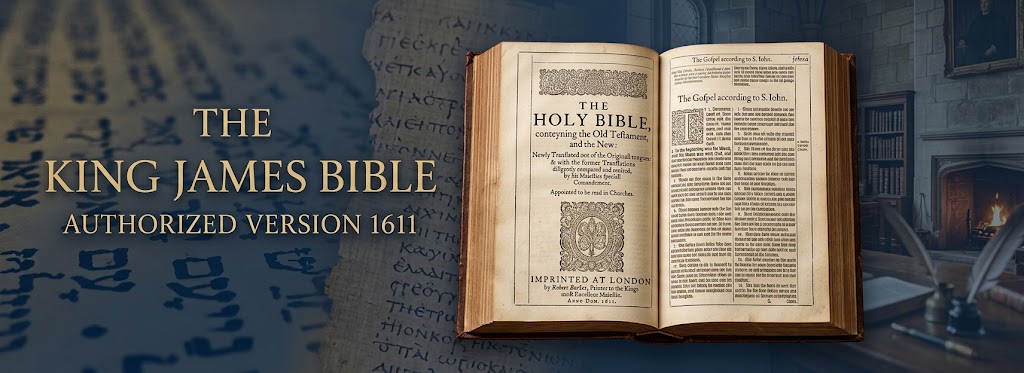
The title page read: The Holy Bible, containing the Old Testament and the New: Newly Translated out of the original Tongues: and with the former Translations diligently compared and revised, by his Majesty’s special Commandment. Appointed to be read in churches.
That last phrase placed it in the line of official church Bibles alongside the Great Bible and the Bishops’. Yet there is no evidence that the King James Bible was ever formally authorized by the bishops or by the king — a striking fact about a book universally called the Authorized Version.
Geddes MacGregor drew the right conclusion from this, and it is a conclusion worth pondering. Lacking official authorization, the King James Bible made its own way on merit alone, acquiring an authority greater than any decree could have conferred. It was authorized not by edict but by acclamation — by the free consent of a people who found it true.11
Two issues appeared in 1611, distinguished by their reading at Ruth 3:15 and known ever since as the He Bible and the She Bible.
The volume also carried an Epistle Dedicatory to the king, which is flattery of the period and eminently forgettable, and the great preface described above, which is not.
Reception: A Slow and Total Conquest
It was not an overnight sensation. Barker found himself in financial difficulty almost at once, and the early years of printing were tangled in litigation. The Puritans were unenthusiastic. A scholar named Hugh Broughton, who had not been named to the committees, complained of hundreds of mistranslated words and warned the translators they would answer for their conduct at the last day.
Against those headwinds the book did remarkably well. Between 1611 and 1614 the Geneva Bible went into six editions; the King James went into seventeen. Widen the window to 1644 and the count is fifteen Geneva editions against one hundred eighty-two of the King James. Within fifty years it had supplanted the best-selling English Bible of the age.12
The last Geneva Bible was printed in England in 1616 and on the Continent in 1644. Tellingly, the King James text was eventually issued with the Geneva notes bound in — at least nine editions between 1642 and 1715 — since it was partly that apparatus that had made Geneva beloved.
The Restoration in 1660 secured the victory. From 1660 to 1710 no new English translation was attempted and 237 editions of the King James were printed. From 1662 every Scripture reading in the Book of Common Prayer was taken from it, except the Psalms, where Coverdale’s Great Bible Psalter was kept for its music.
Westcott’s verdict stands: from the middle of the seventeenth century the King’s Bible has been the acknowledged Bible of the English-speaking nations throughout the world, simply because it is the best.
When the first Bibles were printed in America by Robert Aitken of Philadelphia, they were King James Bibles. When the British and Foreign Bible Society and the American Bible Society were founded in the early nineteenth century, they distributed it in quantities that beggar description. Wherever English went, this book went with it.
The Text Refined, 1613–1769
The King James Version you hold today is not, letter for letter, the folio of 1611 — and this is no scandal, but ordinary publishing history honestly told.
Substantive editorial revisions followed in 1613, 1629, and 1638, and a further standardization came in the eighteenth century, culminating in Benjamin Blayney’s Oxford edition of 1769.13 The changes fall into three classes: correction of printers’ errors, standardization of spelling and grammar, and editorial regularization including the treatment of italics. A reader comparing 1611 with a modern printing meets bee for be, borne for born, in stead for instead, and Sem for Shem.
The printing history was not always honorable. In 1659 William Kilburne published Dangerous Errors in Several Late Printed Bibles, cataloging corrupt readings in the impressions of Henry Hills and John Field and warning Christians to be advised what they bought. He recalled Archbishop Ussher’s zeal, noting that for the omission of the word not from the seventh commandment in one impression the printer was fined two thousand pounds.14
Blayney’s own report to the Delegates of the Clarendon Press survives. He collated the folio of 1611, the 1701 edition prepared under Bishop Lloyd, and two recent Cambridge editions; corrected many errors; attended to punctuation for both sense and uniformity; had frequent recourse to the Hebrew and Greek originals with particular care for the words supplied in italics; revised the chapter headings; rectified errors in the chronology; and repaired the marginal references. The work occupied him between three and four years.15
Blayney’s edition is, in substance, the King James Version in use today. The readings and the translation have scarcely changed since 1611; the spelling, punctuation, and apparatus have.
What It Did to the English Language
Theodore Roosevelt was not overstating when he wrote that no other book written in English — perhaps no other book in any tongue — has so affected the whole life of a people as the Authorized Version has affected the life of the English-speaking peoples.16
The point is easiest to feel in the phrases. English speakers who have never opened a Bible say them daily:
- the land of the living (Job 28:13)
- at their wit’s end (Psalm 107:27)
- heap coals of fire on his head (Proverbs 25:22)
- there is no new thing under the sun (Ecclesiastes 1:9)
- the salt of the earth (Matthew 5:13)
- the signs of the times (Matthew 16:3)
- in the twinkling of an eye (1 Corinthians 15:52)
- a law unto themselves (Romans 2:14)
- labour of love (1 Thessalonians 1:3)
- as a lamb to the slaughter (Isaiah 53:7)
- filthy lucre (1 Timothy 3:3)
The biblical entries in Bartlett’s Familiar Quotations have been published separately as a volume over two hundred pages long, and every quotation in it is from the Authorized Version.17
John Richard Green’s judgment in his Short History of the English People has never been seriously challenged: as a mere literary monument, the English version of the Bible remains the noblest example of the English tongue.
What It Did to a Civilization
George Lindbeck put the deeper matter precisely. Until recently, most people in traditionally Christian countries lived inside the linguistic and imaginative world of the Bible — and the text above all texts was this one. Its stories, images, patterns of thought, and turns of phrase permeated the culture from top to bottom. This was true even of those who could not read and did not attend church, because the knowledge was transmitted through an interwoven net of literary, artistic, folkloric, and proverbial tradition. Christendom dwelt imaginatively in the biblical world.18
Sit with that. For three hundred years a whole civilization thought in the vocabulary of this book. Its law courts, its schoolrooms, its politics, its poetry, its hymnody, its painting and its music took their furniture from it. Men who hated Christianity still argued against it in the cadences of the Authorized Version, because they had no other language for the deep things.
Why It Reads As It Does
It is often said that the literary excellence of the King James Bible is miraculous, and there is something in that — forty-seven men on six committees in three cities over six years is not a recipe for a masterpiece. The translators were not literary scholars but Hebraists and Hellenists, and they had no thought of making a world literature; they believed they were making an accurate Bible.
Yet several things make the result less mysterious than it appears.19
They were men of the English Renaissance, educated in a curriculum built almost entirely on language — day-long study of Latin and Greek, saturation in the great books. Facility with words was second nature. The English language itself was at a moment of extraordinary energy: this was Shakespeare’s generation, and the tongue was at what Trevelyan called its brief perfection. And the idea that the Bible in its original form is supreme as literature was gaining ground, in Calvin, in Donne, and shortly afterward in the Westminster Confession’s celebration of the heavenliness of the matter and the majesty of the style.
But the deepest reason is the simplest, and it is a lesson for translators still. Their eloquence was a by-product of their fidelity. They kept close to the words of the Hebrew and the Greek, and the Hebrew and the Greek are themselves magnificent. Aiming at truth, they arrived at beauty. Men who set out to be beautiful rarely are; men who set out to be faithful to a beautiful original frequently are.
The revisers of 1881, who had every professional reason to be grudging, paid it one of its finest compliments in their own preface: the longer they studied it line by line, the more they learned to admire its simplicity, its dignity, its power, its happy turns of expression, its general accuracy, the music of its cadences, and the felicities of its rhythm.
Tyndale’s Prayer Answered
Return to where this began. Roughly nine-tenths of the King James New Testament is William Tyndale’s wording. The same holds for the portions of the Old Testament he lived to finish.
Tyndale was strangled and burned at Vilvoorde on October 6, 1536, praying that the Lord would open the King of England’s eyes. Seventy-five years later a king of England put his name to a Bible that is substantially Tyndale’s, and that Bible went out to the ends of the earth.
He never saw a page of it. He was not meant to. The sower and the reaper rejoice together, and the harvest was not his to gather.
Every time an English-speaking Christian reads the Lord is my shepherd, or in the beginning was the Word, or let not your heart be troubled, he is reading a man who died for the privilege of letting him do so.
Using It Well Today
How should we hold this book now, when most of us read another translation?
With gratitude, not idolatry. The translators would be the first to resist any claim that their work was inspired. They set alternative renderings in the margin precisely because they wanted readers to weigh the possibilities, and they defended the practice at length against those who thought marginal variety would shake the authority of Scripture. Their own answer was that whatever is necessary is manifest and plain, and that the difficulties exist partly to whet our wits, partly to stir up our devotion to crave the assistance of God’s Spirit by prayer, and partly to make us seek the help of our brethren.20 A version whose own translators printed alternatives in the margin cannot honestly be made a standard that admits no alternatives.
With honesty about its limits. The Greek text available in 1604 was relatively poor, and textual criticism as a discipline did not yet exist. The translators knew classical Greek superbly but knew little of the everyday Greek of the New Testament period, which the papyrus discoveries of the nineteenth and twentieth centuries would illuminate. Saying so is not disloyalty; it is exactly the standard the translators applied to their own predecessors.
As a living tradition, not a relic. The King James principles — fidelity to the words of the original, resistance to paraphrase, care for dignity of expression — are carried forward in the versions that stand in its line. To read the ESV or the NKJV attentively is to remain in the King James inheritance.
As a door into our own past. When we read Milton, Bunyan, Handel, Lincoln, Dickinson, or Spurgeon, we should read the Bible they read. Quoting a modern version when discussing an author who lived inside the Authorized Version is a small scholarly carelessness that obscures a great deal.
And simply to read it. Its archaism is not only a barrier; it is also a gift. It reminds us that this book is ancient and other, that it did not originate in our idiom or for our convenience, and that generations of the faithful have gone to heaven with these cadences in their mouths.
Soli Deo Gloria
The story of the King James Version is finally not a story about scholarship, or about England, or even about a book. It is a story about a God who speaks and will be heard.
He was not stopped by Arundel’s Constitutions, nor by the fires at Coventry, nor by Tunstall’s bonfire at St Paul’s, nor by the Inquisitor-General in Paris, nor by Mary’s three hundred stakes, nor by the small and self-serving motives of James Stuart. He took every obstruction and made it a stepping stone. He let a hunted man’s English become a king’s Bible. He let a defeated Puritan’s parting request become the most read book in the history of the language.
The Word which goeth forth from his mouth does not return unto him void.
The Lord work a care and conscience in us to know him and serve him, that we may be acknowledged of him at the appearing of our Lord JESUS CHRIST, to whom with the Holy Ghost be all praise and thanksgiving. Amen.
Sources
- “The Translators to the Reader,” preface to the Authorized Version (1611), in the section headed “The purpose of the Translators, with their number, furniture, care, &c.” ↩
- Leland Ryken, The Legacy of the King James Bible: Celebrating 400 Years of the Most Influential English Translation (Wheaton, IL: Crossway, 2011), ch. 3, drawing on James Baikie, The English Bible and Its Story. ↩
- Ryken, Legacy, ch. 3, for the January 1604 dating; William Barlow, The Sum and Substance of the Conference … at Hampton Court (1604), which dates the conference to January 1603, Old Style. ↩
- Barlow, Sum and Substance; quoted also in Ryken, Legacy, ch. 3. ↩
- Ryken, Legacy, ch. 3, drawing on David Daniell, The Bible in English, and Benson Bobrick, Wide as the Waters. ↩
- Gustavus S. Paine, The Men Behind the King James Version (1959; repr. Grand Rapids: Baker, 1977), 41, 167–68, quoted in Ryken, Legacy, ch. 3. ↩
- Ryken, Legacy, ch. 3, summarizing the chronology from Baikie, Herbert Gordon May, and Donald Brake. ↩
- “The Translators to the Reader,” 1611. ↩
- “The Translators to the Reader,” 1611, in the section headed “The praise of the Holy Scriptures.” The quotations that follow are from the sections headed “Translation necessary,” “The purpose of the Translators,” and the concluding exhortation. ↩
- Ryken, Legacy, ch. 3. ↩
- Geddes MacGregor, The Bible in the Making (Philadelphia: J. B. Lippincott, 1959), 181, discussed in Ryken, Legacy, ch. 3. ↩
- MacGregor, The Bible in the Making, 187, cited in Ryken, Legacy, ch. 3. ↩
- Matthew Verschuur, Facts from Four Hundred Years of King James Bible Editions. This source is compiled from a King James–only standpoint and argues for the priority of the Pure Cambridge Edition; its edition table and dating of changes are cited here for that factual content only, not for its conclusions. ↩
- William Kilburne, Dangerous Errors in Several Late Printed Bibles (Finsbury, 1659). ↩
- “Dr. Benjamin Blayney’s Report,” to the Vice-Chancellor and Delegates of the Clarendon Press (1769). ↩
- Theodore Roosevelt, Realizable Ideals, quoted in Ryken, Legacy, ch. 6. ↩
- Ryken, Legacy, ch. 6, citing Bartlett’s Bible Quotations. ↩
- George Lindbeck, quoted in Ryken, Legacy, ch. 6. ↩
- Ryken, Legacy, ch. 8, gathering the judgments of Alister McGrath, David Norton, C. B. McAfee, and others. ↩
- “The Translators to the Reader,” 1611, in the section headed “Reasons moving us to set diversity of senses in the margin, where there is great probability for each.” ↩
Further Reading
- Leland Ryken, The Legacy of the King James Bible (Crossway, 2011) — the best single volume on the KJV’s influence
- Alister McGrath, In the Beginning: The Story of the King James Bible and How It Changed a Nation, a Language, and a Culture (Anchor, 2001)
- Adam Nicolson, God’s Secretaries: The Making of the King James Bible (HarperCollins, 2003)
- Benson Bobrick, Wide as the Waters: The Story of the English Bible and the Revolution It Inspired (Penguin, 2001)
- David Daniell, The Bible in English: Its History and Influence (Yale, 2003)
- Gustavus S. Paine, The Men Behind the King James Version (1959)
- Olga S. Opfell, The King James Bible Translators (McFarland, 1982)
- Cleland Boyd McAfee, The Greatest English Classic (1912)
- Charles C. Butterworth, The Literary Lineage of the King James Bible, 1340–1611 (1941)